Asking Price vs. Sale Price: Two Distinct Market Signals
When evaluating property values in Spain, there are two main price reference systems: the asking prices on real estate portals and the final sale prices recorded by notaries. Alejandro Linares, co-founder of Aqueos, points out that the former reflects the seller’s expectations, while the latter documents the actual amount the transaction closed for. Therefore, relying solely on the asking prices from platforms like Idealista can lead to overestimating a property’s true market value. Data from real estate portals better reveals the current competitive landscape, including seller offers, the number of properties for sale, and regional price trends, but it contains significant room for negotiation.
Understanding the Data Discrepancy: A Madrid Case Study
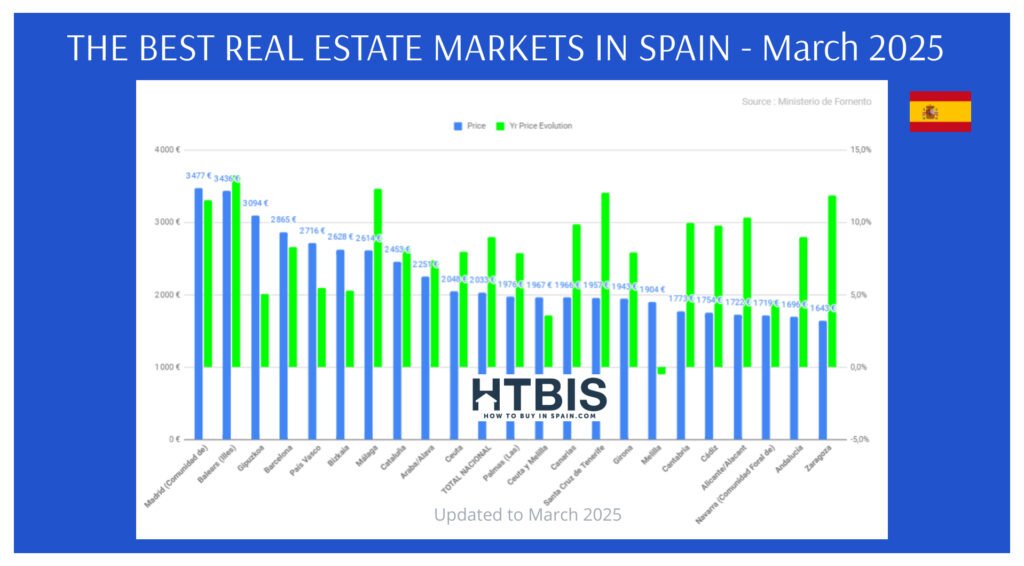
The gap between asking and sale prices is particularly evident in the data. For instance, in the city of Madrid, the average asking price in June 2026 reached €6,013 per square meter, according to Idealista’s data. However, looking back at property transactions confirmed by notaries over the past 12 months, the average sale price was closer to €5,100 per square meter. This represents a difference of approximately 15%. It’s important to note that this percentage is an average and does not mean every property has the same premium. This discrepancy arises because asking prices include properties that are overpriced or have been on the market for a long time. They are more a reflection of market sentiment than a guarantee of a final transaction.
The Data Lag: A Limitation of Notarized Prices
Although notarized sale prices are closer to the true market level, they have a key issue: data lag. Typically, data released by notaries is several months behind the current market situation. For example, statistics published by a notary office at the end of June might reflect transactions completed in April. More importantly, the process from when a buyer and seller agree on a price and sign a deposit agreement to the final transfer of title at the notary’s office usually takes another two to three months. This means that the currently published sale prices actually reflect market conditions from several months prior, making them less useful for a rapidly changing market.
A Combined Analysis: Smart Strategies for Buyers and Sellers
For potential buyers and sellers, the most effective strategy is to use both types of data in combination. Experts advise buyers to first use notary data to understand the recent range of actual sale prices in their target area, using this as a solid basis for price negotiation. Then, by observing current listings, competitor pricing, and how long properties have been on the market on platforms like Idealista, they can gauge the negotiation room for a specific property. If a property’s asking price is significantly higher than recent actual sale prices in the same area, the buyer has stronger leverage to negotiate a lower price. Similarly, sellers can use notary data to set a realistic sale price, avoiding the risk of their property remaining unsold for a long time due to overpricing. Relying solely on advertised prices for negotiation is essentially bargaining against the seller’s hopes, not against the true market value.
