On September 11, 2026, the Government of the Community of Madrid unveiled a development blueprint aimed at advancing the capital’s transport system towards full automation. The plan includes two core initiatives: launching a pilot for self-driving ride-hailing vehicles and automating Metro Line 6 while extending its weekend operating hours.
Robotaxi Pilot Set to Begin
According to the plan, the first fleet of autonomous ride-hailing vehicles will begin trial operations in the fourth quarter of 2026 in Madrid, Alcobendas, and other cities within the Community. This two-year initial phase of the pilot project will be conducted as a public-private partnership, involving autonomous driving technology developers, fleet operators, ride-hailing platforms, and representatives from the taxi industry.
The project’s primary goal is to assess the practical effectiveness of autonomous technology in improving road safety and reducing traffic accidents. The technology has reportedly been tested in over 20 cities worldwide, covering approximately 322 million kilometers and completing more than 20 million trips. With this initiative, the Government of the Community of Madrid aims to make the region the first in Europe to deploy such a transport service, establishing its leadership in the future of mobility.
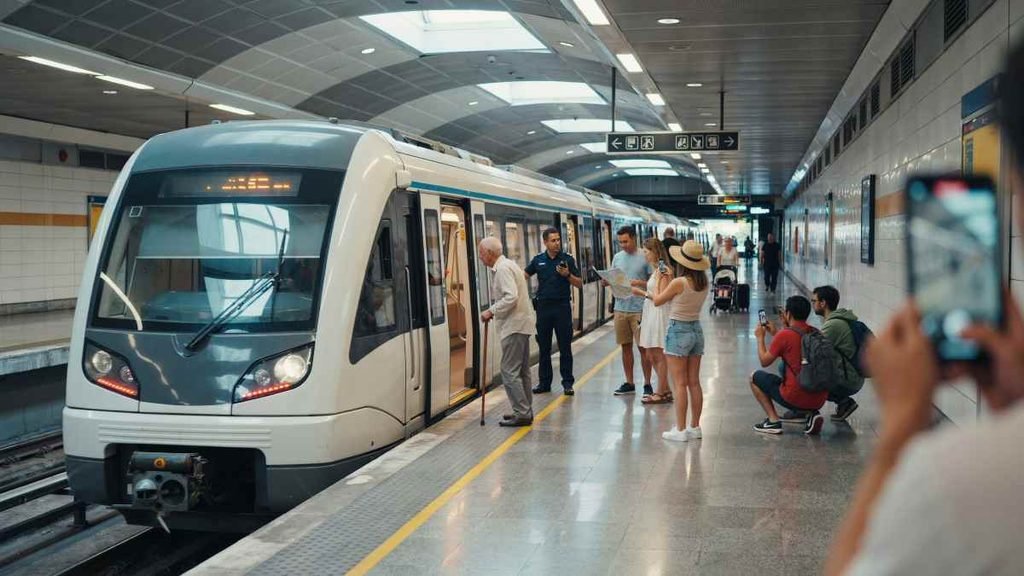
Metro Line 6: The First Automated Line with 24/7 Weekend Service
As another key part of the plan, Madrid’s Metro Line 6 is expected to complete its automation upgrade in 2027, becoming the capital’s first driverless metro line. Upon completion, the line will operate 24 hours a day on all weekends throughout the year.
The specific operating hours will be adjusted to run continuously from 6:00 AM every Friday until after 1:30 AM on Monday, thus eliminating the regular nightly closures on Fridays and Saturdays. This change is designed to accommodate nightlife enthusiasts and late-night commuters.
Benefits of Automation and Operational Adjustments
Metro Line 6 is the busiest interchange line in the Madrid Metro network, with an average daily ridership of about 430,000 passengers. It connects with 10 other metro lines, five major transport hubs, four commuter train stations, and Madrid’s South Bus Station. The Government of the Community of Madrid states that automation will help increase the line’s capacity, improve operational stability, and allow for flexible adjustments to train frequency based on real-time passenger demand.
To accommodate the continuous weekend service, line maintenance work will also be rescheduled. Routine maintenance and inspection, previously conducted late on Friday and Saturday nights, will be concentrated in the overnight period from Sunday to Monday to ensure the line’s safety and reliability during its 24-hour operation.
