Alberto Nunez Feijoo, president of the Spanish Popular Party (Partido Popular), recently unveiled a comprehensive housing plan aimed at resolving the domestic real estate crisis. This plan will serve as a core component of his campaign pledges. If he successfully forms a government in the 2027 elections, the Spanish housing market could experience major transformations across various dimensions, including taxation, zoning approvals, and property rights protection.
Massive Financial and Tax Support for Young Homebuyers
In this newly announced blueprint, alleviating the financial burden on young homebuyers is a top priority. Feijoo promised that, if implemented, young people entering the workforce will enjoy exclusive personal income tax benefits during their first four years. During property transactions, the property transfer tax and value-added tax (VAT) rates for first-time young buyers will be drastically reduced from the current 10% to 4%. Furthermore, if parents provide financial assistance to their children for purchasing a home, the associated gift tax will be reduced or completely exempted.
To encourage young people to plan their housing funds early, the plan proposes establishing an exclusive “Youth Housing Savings Account” for individuals under 40. This account would allow a maximum annual deposit of 2,000 euros, with a cumulative limit set at 40,000 euros. Funds deposited into this account will be eligible for a 20% deduction when filing personal income taxes. In addition, the government will provide a 95% to 100% public guarantee for the mortgages of young first-time buyers. Taking a standard home priced at 250,000 euros as an example, a young person who starts working at 25 and buys a home at 30 could save between 21,000 and 26,000 euros in taxes and fees through this combined policy, while lowering the upfront capital threshold by approximately 50,000 euros.
Streamlining Approval Processes and Strengthening Property Rights
Addressing issues of delayed real estate development and property disputes, the plan proposes dual reforms at both administrative and legal levels. Feijoo advocates repealing the current Housing Law (Ley de Vivienda) enacted in 2023 and introducing a “90-day administrative silence” mechanism: if private real estate developers submit project plans to relevant government departments and do not receive any official rejection or approval response within 90 days, the project will automatically be deemed approved, allowing the development process to proceed.
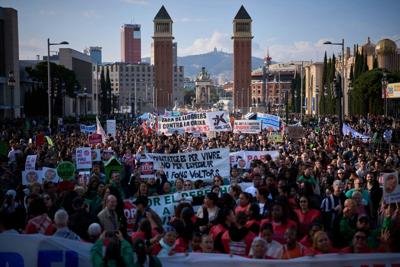
On the highly debated social issue of combating illegal squatting (Okupas), the new plan pledges to significantly shorten the cycle of judicial and law enforcement intervention. By improving legal safeguards, the statutory time limit for evicting squatters will be compressed to within 24 to 48 hours, aiming to restore market confidence in private property rights.
Addressing Supply-Demand Imbalance and Boosting the Job Market
Feijoo pointed out that the current housing shortage in Spain has reached approximately 750,000 units, and the supply of rental properties has plummeted by a third, causing housing prices to rise at a rate 2.6 times faster than average wage growth. To reverse this situation, he promised to drive the construction of 1 million new homes nationwide during his four-year term through the aforementioned incentives and deregulatory measures.
According to preliminary estimates by the Popular Party, this massive construction and development initiative will not only effectively alleviate the supply-demand imbalance but will also directly or indirectly create about 750,000 new jobs across upstream and downstream supply chains.
It is worth noting for the market and the public that the aforementioned series of measures, encompassing tax cuts, guarantees, and administrative reforms, currently remain the electoral blueprint of an opposition party. The specific scope of application, application thresholds, and the final implementation timetable for each provision will depend on the outcome of the 2027 general elections and the progression of subsequent legislative procedures.
