Spain’s Inflation Rate Tops Major Economies
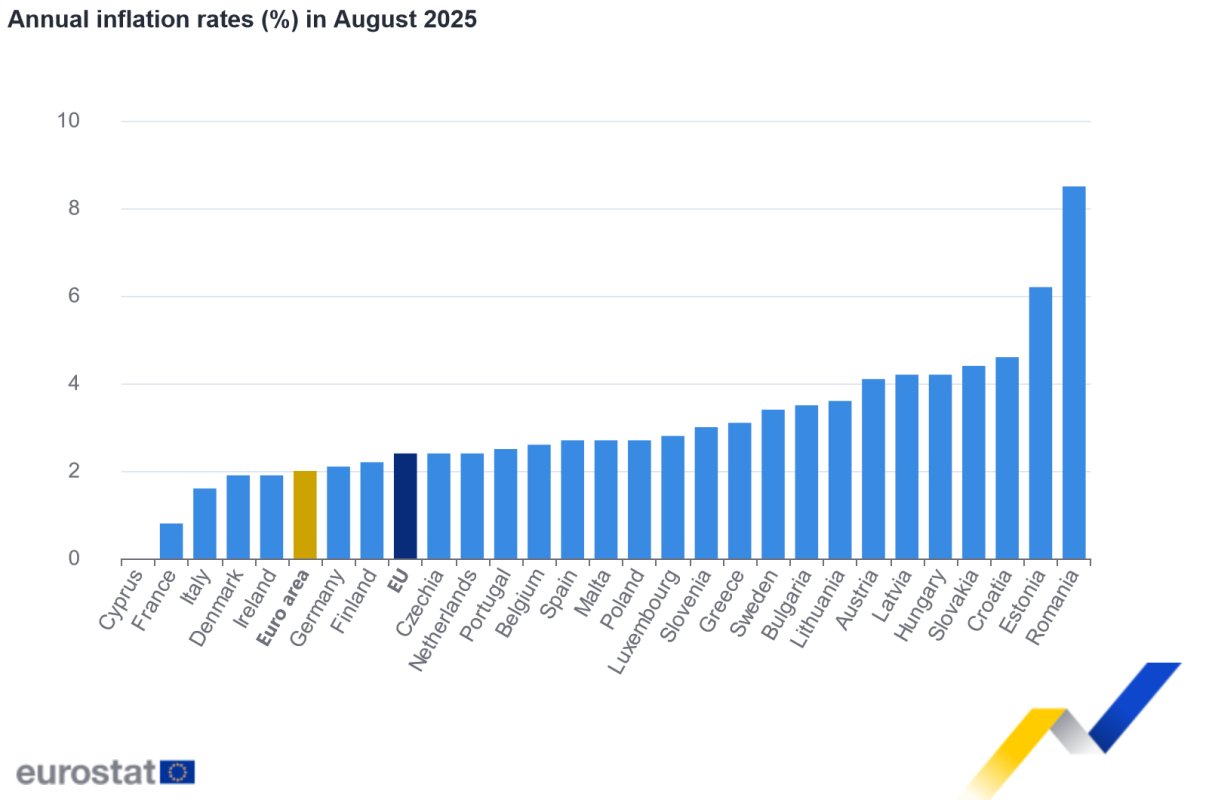
According to the latest economic indicators released by Eurostat, Spain’s inflation rate climbed to 4.6% in August. This figure makes Spain once again the country with the fastest-rising prices among the large economies in the Eurozone. In comparison, the inflation increases in other major European countries were relatively moderate, with Italy at 3.2%, Germany recording 2.9%, and France remaining at 2.6%. Furthermore, Spain’s inflation data exceeded the Eurozone’s overall average of 3.2% by 1.4 percentage points, highlighting that consumers in the country are bearing a heavier burden of upward price pressures.
Energy Prices Emerge as Main Driver of Rising Costs
Among various consumer goods, the severe fluctuation in energy costs is the key engine driving this inflationary surge. Data shows that energy prices in Spain soared by 14.3% in August compared to the same period last year. Other major consumer sectors also experienced varying degrees of increase: service prices rose by 3% year-on-year, fresh food prices increased by 2.7%, while non-energy industrial goods and processed foods edged up slightly by 1.2% and 0.5%, respectively. It is worth noting that after excluding highly volatile energy, fresh food, and alcohol and tobacco products, the country’s core inflation rate did not follow the headline data upward, but rather dipped slightly from 2.5% in July to 2.4%. The trajectory of the core inflation rate has always been an important reference benchmark for the European Central Bank (ECB) when evaluating and adjusting monetary policy.
Overall Eurozone Inflation Rebounds
Looking at the broader European macroeconomic environment, inflation is also showing a rebounding trend. In January of this year, the Eurozone inflation rate briefly dropped to a low of 1.7%, but it has continuously climbed in subsequent months and currently significantly deviates from the ECB’s long-term target of 2%. Moreover, the broader European Union’s overall inflation rate for August also rose by 0.2 percentage points month-on-month, reaching 3.2%. According to recent macroeconomic forecasts disclosed by the ECB, inflationary pressures will persist in the coming years. It is projected that the Eurozone inflation rate will remain around 3% in 2026, and is only expected to fall back to 2.5% and 2.1% by 2027 and 2028, respectively.
Significant Divergence in EU Member State Inflation Data
From a cross-sectional comparison of EU member states, there are significant regional differences in inflation levels. In August, Romania topped the entire EU with an inflation rate of 6.3%, followed closely by Lithuania (5.6%), Cyprus (5.2%), and Bulgaria (5%), with Spain ranking fifth at 4.6%. Countries in the middle tier include Belgium (4.2%), Luxembourg (4%), and Greece and Croatia tied at 3.7%. Nordic and some Central European countries face relatively lighter inflationary pressures, with France at 2.6%, Finland at 2.4%, Denmark and Hungary both at 1.8%, the Czech Republic and Estonia at 1.5% and 1.3% respectively, while Sweden set the lowest record in the EU with a figure of 0.3%. Overall, faced with persistently high prices for energy and daily necessities, households in Spain and other nations still confront ongoing practical challenges in managing their expenses.
