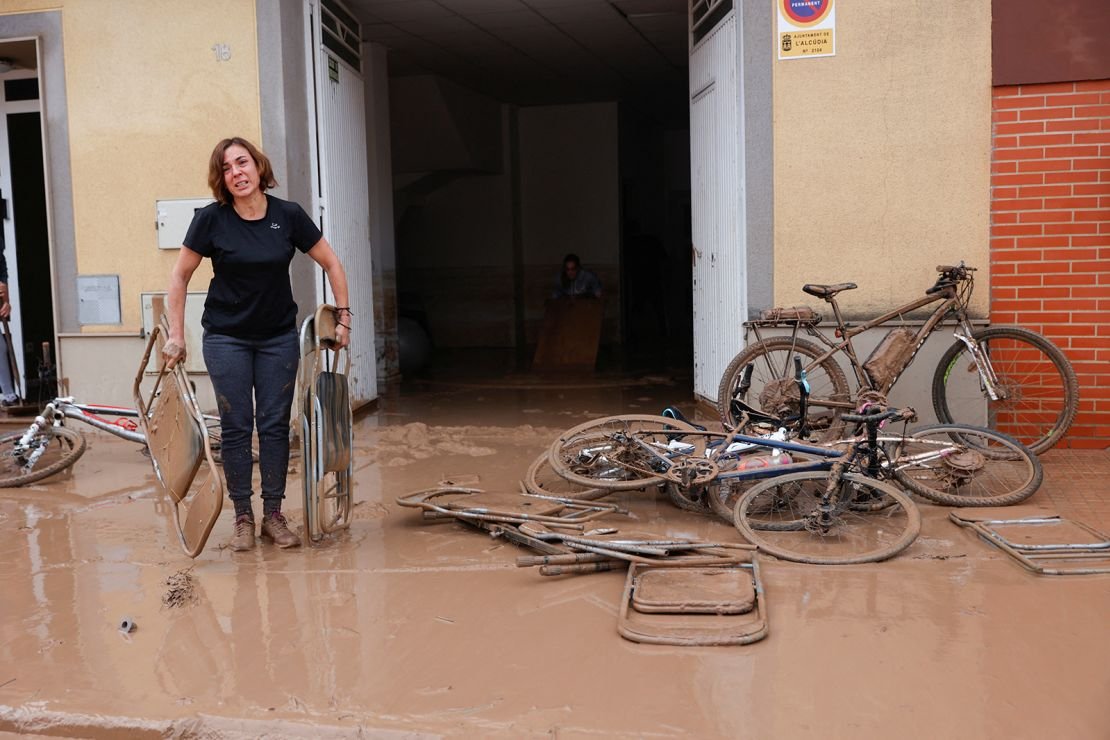
On the evening of September 16, a severe and extreme storm system swept across multiple provinces along Spain’s Mediterranean coast. Valencia, Catalonia, Murcia, and Almeria successively experienced historically rare short-term torrential rains and hailstorms. The extreme weather not only triggered severe urban flooding but also directly caused disruptions to land and air transportation networks and the suspension of public educational activities. It has been confirmed that the rainstorm claimed the life of one civilian, and emergency government rescue plans have been deployed in the affected areas.
Widespread Extreme Rainfall and Hail Plunge Multiple Provinces into Severe Flooding
The destructive power of this severe convective weather was significant, with the provinces of Girona, Valencia, and Barcelona being the hardest hit. In the Girona region, localized areas were struck by highly destructive large hail, with the maximum size approaching that of a two-euro coin. Meteorological records show that rainfall in some municipalities surged to over 40 millimeters in just half an hour; the downpour caused water to cascade down the steps of the famous Girona Cathedral, creating a waterfall-like spectacle. Due to overloaded municipal drainage systems, local fire departments received about 30 distress calls related to flooded roads and leaking houses within a three-hour window from 15:00 to 18:00.
The province of Valencia also faced extreme rainfall tests. Cumulative rainfall in areas such as l’Eliana and Chiva-Calicanto surpassed the 100-millimeter mark, while Torrent recorded a localized extreme of 71 millimeters in just 30 minutes. Several municipalities, including Real, Monserrat, and Alginet, experienced not only lightning and thunder but also powerful wind gusts reaching up to 100 kilometers per hour, carrying severe hazard risks.
Land and Air Transportation Disrupted as Severe Weather Claims a Life
Disastrous floods dealt a heavy blow to the transportation systems of Mediterranean coastal cities. Due to plummeting runway visibility and multiple flooded areas, Valencia Airport was forced to announce a temporary closure and suspension of operations, while core lines of the Metrovalencia network were also affected. Emergency rescue management departments handled as many as 478 alerts between 14:00 and 23:00, mostly involving people trapped in flooded roads, traffic paralysis, and damaged homes.
Operations in the Catalonia region were equally bleak. Major roads in and around Barcelona were heavily flooded, the Catalan commuter rail service (Rodalies) experienced multiple line delays, and Barcelona International Airport faced massive flight cancellations. The storm even led to a tragedy in the municipality of Olivella in the province of Barcelona: a man driving his vehicle was suddenly swept away by surging torrents, and professional search and rescue teams later found his body in a downstream flood discharge area about 500 meters from where he went missing.
Football Matches Canceled and Emergency School Closures Ordered Across Multiple Regions
Due to the extremely harsh weather conditions, numerous outdoor and social gathering activities were suspended. Spain’s premier football league (La Liga) quickly issued a decision to officially cancel the scheduled match between Levante UD and Athletic Club during the storm period due to force majeure.
Out of concern for public safety, about 15 municipalities in the Murcia region, including Lorca, Cartagena, Mazarrón, and San Javier, fully activated the highest alerts and suspended offline operations for primary and secondary schools as well as other educational institutions. The province of Almeria followed suit, with schools in Pulpí, Huércal-Overa, and Cuevas del Almanzora successively implementing class suspensions to prevent accidents.
Meteorological Agency Emphasizes Ongoing Risks and Warns Against Secondary Hazards
Although the main rain band has gradually shifted, the State Meteorological Agency (AEMET) has issued clear guidance indicating that the storm’s impact had not completely left the eastern Iberian Peninsula by the night of September 16. According to meteorological computer model predictions, some highly susceptible areas in Valencia could still face a new round of extremely heavy rainfall on September 17, with short-term water accumulation in certain terrains expected to breach the 120-millimeter extreme warning line once again.
Currently, the relevant administrative regions remain under high-alert warning stages. Disaster prevention command centers at all levels have repeatedly urged permanent residents, international students, and tourists to closely monitor real-time hazard dynamic information published by local agencies and AEMET. The public is specifically advised not to force their way through unknown flooded pools and low-lying areas, and to strictly avoid riverbeds and stream zones prone to flash floods.
