Abundant Real Estate and Ecological Assets
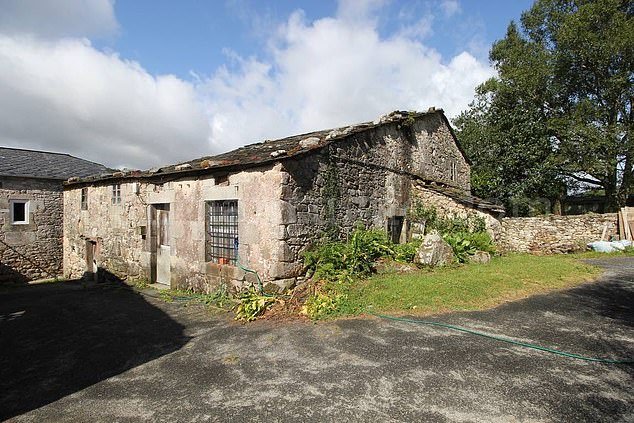
Recently, the specialized real estate platform for unique properties, ‘Aldeas Abandonadas’ (Abandoned Villages), listed an entire natural village for sale in the Asturias region of northwestern Spain. The initial asking price of the property was 2.3879 million euros, which has now been reduced to 1.89 million euros. Spanning a massive 770 hectares, the infrastructure includes 14 traditional houses, a church, a cemetery, and a large manor house that once belonged to the local lord. The complex also retains dovecotes, stables, and traditional granaries—typical of Asturias, elevated on pillars to prevent rodent infestations.
In addition to the historical buildings, this asset is bundled with a massive natural ecosystem. The land features streams and vast forests comprised of beech, oak, and ash trees, serving as a habitat for wildlife such as deer, otters, and golden eagles. The area even includes a historically significant lekking ground for the rare capercaillie, boasting incredibly high ecological diversity.
High Additional Taxes and Fees During Acquisition
Although the 1.89 million euro price tag might seem attractive compared to properties in core cities like Madrid or Barcelona, this is merely the base acquisition cost. Once entering the actual transaction phase, investors must bear high additional taxes and fees.
The primary expense is a Property Transfer Tax (ITP) of approximately 181,000 euros. It is important to note that if the government-assessed cadastral reference value exceeds 1.89 million euros, this tax will increase accordingly. While the regional government of Asturias offers a 100% ITP exemption policy for rural and agricultural land, the legal prerequisite for this benefit is the presence of operational agricultural or livestock buildings on the land. The abandoned manor complex and church obviously do not qualify for this exemption. Furthermore, when factoring in notary fees, land registry fees, and legal and accounting declaration services, the hard initial acquisition cost of the entire project will be pushed up to around 2.09 million to 2.11 million euros.
The Financial Black Hole of Daily Holding and Maintenance
For a vast natural complex spanning 7.7 square kilometers, long-term holding costs often constitute the biggest obstacle to return on investment.
According to local financial regulations, if the cadastral value of the property is assessed between 1 million and 2 million euros, an annual Real Estate Tax (IBI) of 6,000 to 12,000 euros must be paid. If held under an individual’s name, an annual wealth tax of approximately 8,000 euros is also legally required. Preliminary estimates indicate that even if the property is maintained at a minimal dormant state after purchase (only inhabiting the main house while physically sealing the remaining buildings), the annual basic taxes and energy expenses would still range from 20,000 to 30,000 euros. If one wishes to conduct risk-resistant maintenance on all buildings, woodlands, and road networks in compliance with safety standards, professional personnel must be hired and high-premium commercial insurance purchased, pushing this annual expenditure up to 60,000 to 120,000 euros.
Moreover, the listing indicates that the property’s building energy rating is only at the lowest G level. This means that under Europe’s increasingly strict carbon emission standards, the owner may face massive hidden costs for mandatory environmental and energy efficiency renovations at any given time in the future.
Long-term Risks of Commercial Development
Faced with heavy holding costs, investors typically lean towards converting it into a commercial resort integrating eco-tourism, equestrian, or hunting experiences to achieve positive cash flow. However, the financial model for operating such projects in remote Spanish villages is extremely punishing.
Comprehensive commercialization means establishing standardized road maintenance, a forest fire prevention system, architectural structural reinforcement plans, and security systems in accordance with municipal requirements. If labor employment and preliminary marketing expenses are combined, the project’s annual operational budget is conservatively estimated at between 200,000 and 500,000 euros. Even more severe is the bottleneck in market foot traffic conversion—compared to popular red ocean tourist cities with inherent international traffic like Barcelona, Granada, or Seville, Asturias’ rugged mountainous geographical location and weaker brand awareness greatly limit the willingness of mass tourists to visit.
This is also the core reason why many European countries have frequently offered abandoned villages and ancient castles at extremely low prices or even given them away for free in recent years, yet very few mature, high-end cultural tourism projects have actually taken root. The massive capital lockdown requirements, extended payback periods, and unpredictable natural and policy risks during operation make this type of real estate—which carries human historical memory and rare natural ecology—often become a ‘hot potato’ that capital hastens to avoid.
