The retail brand Kaufland, part of the German Schwarz Group (Grupo Schwarz), has officially entered the Spanish market. Unlike Lidl, which belongs to the same group, Kaufland has opted against the traditional expansion route of physical supermarkets. Instead, it is penetrating Spain’s retail and e-commerce sector through a purely online model by launching the Kaufland.es platform.
Digital Strategy: Launching a Third-Party E-commerce Marketplace
As a renowned retailer with over 1,600 physical hypermarkets across 8 countries, Kaufland’s entry strategy in Spain stands out. The company has abandoned the plan to open large physical stores, pivoting entirely to an online channel layout. Kaufland.es will operate under a third-party marketplace model, similar to Amazon’s operating mechanism. The platform aggregates millions of products from various sellers, allowing consumers to compare and purchase based on price, product features, and delivery times.
Category Scale: Cross-Border Challenge to E-commerce Giants
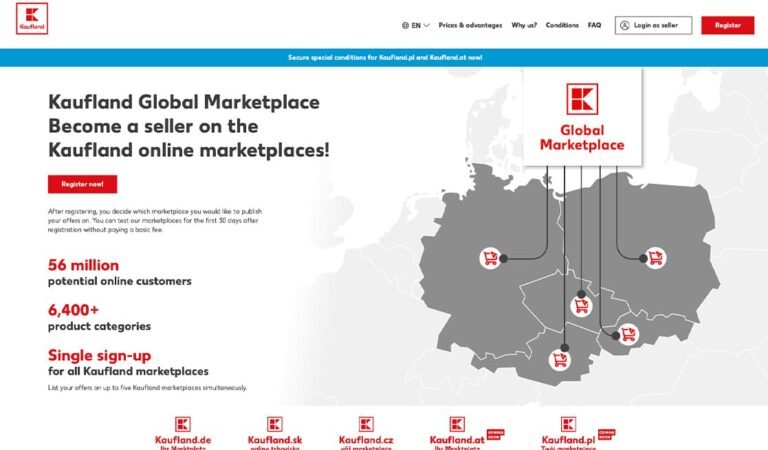
Kaufland’s positioning in Spain transcends the boundaries of a traditional food supermarket. The platform currently covers over 6,400 product categories, venturing into multiple verticals such as home decor, consumer electronics, kitchenware, gardening and DIY, fashion and sports, as well as maternity and pet supplies. This business structure means Kaufland’s direct competitors in Spain are not limited to Lidl or Aldi; it is extending its commercial reach to Amazon, AliExpress, and various specialized retailers. For reference, its operational data in Germany shows the platform attracts about 32 million visitors monthly, with total product listings exceeding 45 million.
Localized Operations: Adapting to Spanish Payment and Service Habits
To accelerate market penetration in Spain, Kaufland has made deep localized adaptations to its payment gateways and customer experience. According to official information, Kaufland.es supports not only mainstream payment methods like credit cards, PayPal, and Apple Pay, but also integrates Bizum, a highly popular local mobile payment tool in Spain. Additionally, the platform has introduced a “Buy Now, Pay Later” feature and established a dedicated Spanish-speaking customer service team to ensure a seamless shopping experience for local consumers.
Expansion Blueprint: Supported by a Massive Local Seller Network
In fact, Kaufland’s online ecosystem is not entirely foreign to the Spanish commercial system. Before Kaufland.es officially opened to Spanish consumers, over 500 local Spanish enterprises had already joined its European e-commerce network to achieve cross-border sales. With the successive launches of the Spanish and Dutch sites, Kaufland’s online business network now covers 9 European countries. This massive e-commerce matrix not only facilitates international trade but also generates nearly 1.7 billion euros in annual online business revenue for the company.
