Proposal for a Comprehensive Review of the Nationality System
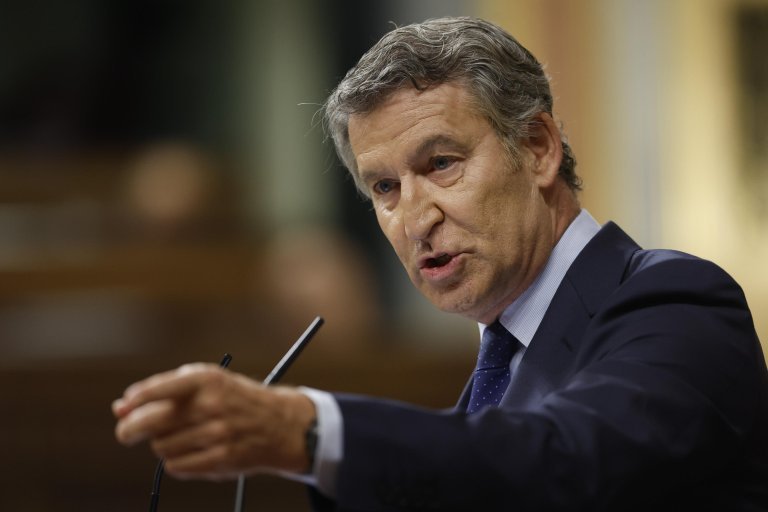
On September 20, 2026, during a rally in Badalona, Catalonia, held to build momentum for the following year’s municipal elections, Alberto Nuñez Feijoo, leader of Spain’s Popular Party (PP), unveiled a political plan aimed at profoundly reforming the nationality system to an audience of approximately 6,000 attendees. Feijoo pointed out that the PP would push for a comprehensive review of the mechanisms for granting, retaining, and revoking Spanish citizenship in the future. Although specific reform clauses have not yet been made public, nor have the exact circumstances that would lead to mandatory citizenship revocation been explicitly listed, Feijoo openly criticized the current government’s lenient standards for easily granting citizenship to millions. He argued that a comprehensive review of the system is necessary to ensure a “fair and reasonable” social order in the country.
Advocating for Stricter Illegal Immigration Policies
At the meeting, which was attended by local dignitaries including Badalona Mayor Xavier Garcia Albiol, border and immigration issues took center stage. Feijoo argued that Spain should establish a more “orderly immigration policy.” He emphasized that the country always welcomes foreigners who are willing to work actively, obey the law, and assume equal social rights and obligations, but it must firmly close its doors to those who attempt to ignore the law and enter the country illegally.
During his speech, he criticized the current administration’s immigration management, pointing out that the economic operation of a modern state should never over-rely on the cheap labor of irregular migrants. Feijoo questioned the irrationalities in the current immigration framework, emphasizing that the process for individuals to legally obtain legitimate status through an employment contract should not be more difficult than entering illegally and staying. He further asked how social harmony and public security could be substantially guaranteed if unregulated individuals were allowed to stay at will.
Focusing on Economic Pressure and Squatting
Beyond nationality and immigration issues, Feijoo also shifted the focus of his speech to the harsh economic realities faced by ordinary Spanish families. He rebutted official claims of economic prosperity and detailed soaring living expenses, including mortgages, rent, education costs, and everyday food and fuel prices, expressing deep concern over how ordinary families can make ends meet under current price levels.
In the realm of housing security, Feijoo specifically addressed the phenomenon of squatting (okupacion), which has recently caused widespread social anxiety. He noted that the Catalonia region currently accounts for up to 40% of all squatted homes in Spain. In response to this chaos, Feijoo strongly urged for stricter judicial and administrative measures to protect the fundamental rights of legitimate property owners, ensuring that citizens do not face the risk of their homes being illegally occupied by outsiders after a brief absence. At the end of the event, he called on voters to use the power of the ballot box to support a political transition, aiming to reverse the current administration’s direction on public security, the economy, and immigration.
