On September 21, senior Spanish government officials provided an update on the ongoing immigration crisis in the North African enclave of Ceuta. Currently, more than 3,000 immigrants remain stranded on the streets, including 500 to 700 unaccompanied minors. With Ceuta’s local shelter system severely overloaded, the Spanish central government is working to distribute these underage immigrants across the country while accelerating identity verification and voluntary return procedures for adults.
Hundreds of Minors Stranded on Streets, Most Wish to Stay in Spain
Sira Rego, the Spanish Minister for Children and Youth, confirmed that there are approximately 500 to 700 minors stranded on the streets of Ceuta, the vast majority of whom have expressed a strong desire to remain in Spain. Under relevant Spanish laws, unaccompanied minors are granted special judicial protection and cannot be forcibly deported immediately upon arrival.
To address this dilemma, the Spanish government is conducting individual case assessments for each minor in accordance with the law, seeking proper subsequent placement for children who cannot be reunited with their relatives in Morocco. Preparations for family reunification files have begun, though officials admit that transnational communication with relevant Moroccan authorities is currently slow and challenging. To alleviate local social pressure in Ceuta, the Minister for Children and Youth has called for the expedited transfer of some minors to the Spanish mainland peninsula.
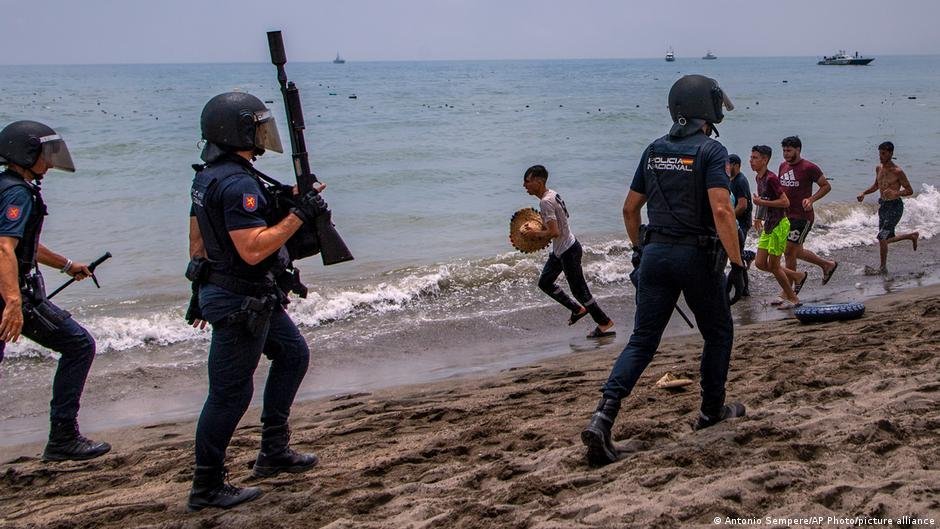
Disagreements Over Regional Placement Hinder Cross-Regional Transfers
The ultimate destination of these underage immigrants has become one of the core political controversies in Spain today. The central government advocates for a unified quota mechanism to distribute minors who meet legal protection criteria to various autonomous communities on the mainland peninsula.
However, during actual implementation, local governments and autonomous communities hold differing views on the number and arrangement of immigrants they are willing to accept, leading to obvious political maneuvering. Although small batches of minors have been successfully transferred to other regions previously, the pace of cross-regional transfers falls far short of keeping up with the pressure of immigrants flooding across the border compared to the massive base of stranded individuals currently in Ceuta.
Thousands Return Voluntarily as Identity Verification Continues
While tackling the difficult task of placing minors, the Spanish government is also speeding up the processing of adult immigrants. Data released by Ángel Víctor Torres, the Minister of Territorial Policy, shows that over 6,000 immigrants have chosen to return to Morocco voluntarily over the recent period. Currently, an average of 150 to 200 people are actively leaving Ceuta daily, with 160 individuals embarking on their return journey in the past 24 hours alone.
Looking ahead, the Spanish government plans to continue conducting strict identity registration and individual case reviews for those stranded. Refugees qualifying for international protection and minors unable to reunite with their families in their home countries will be granted asylum strictly in accordance with international and domestic laws. Meanwhile, for others who do not meet protection criteria and are unwilling to leave voluntarily, Spanish authorities will legally initiate mandatory return procedures to gradually resolve this border crisis.
