Recently, a large-scale demonstration erupted in downtown Barcelona, Spain, with about 5,500 people gathering to protest the government’s newly approved airport expansion project. Participants worry that the expansion plan will not only bring environmental burdens but also further worsen the city’s increasingly severe tourism overload and housing shortage crisis.
Clear Opposition: “Not Now, Not Ever”
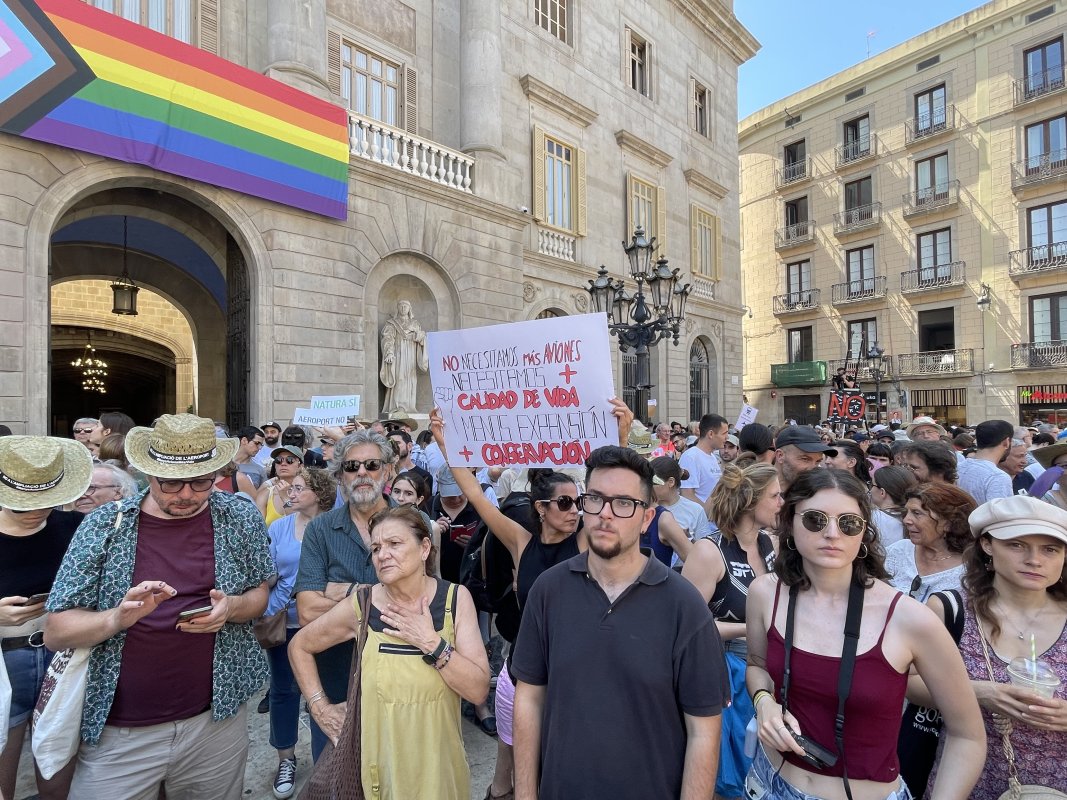
The protest centered on a clear stance of opposition, with demonstrators chanting “Not now, not ever” to express their dissatisfaction with the blind expansion of infrastructure. According to statistics from the Barcelona City Police, about 5,500 people participated in the Sunday march. In addition to environmental concerns about surging carbon emissions, the public is even more focused on the city’s carrying capacity. Protesters generally believe that increasing the airport’s capacity will directly lead to a further expansion of mass tourism, thereby driving up the already alarming local housing costs.
Convergence of Forces: Environmental Groups and Political Support
This massive demonstration, initiated by the environmental advocacy platform “Zeroport,” quickly garnered a widespread response from all sectors of society. Over 200 organizations covering environmental protection, community governance, social welfare, and union rights announced their support and joined the march. The route started from the intersection of Passeig de Gracia and Carrer d’Arago, proceeding all the way to Placa de Sant Jaume. The scene not only featured a bicycle fleet of about a hundred cyclists but also included two tractors symbolizing agricultural interests. Furthermore, political representatives from the Republican Left of Catalonia (ERC), Catalunya en Comu (Comuns), and the Popular Unity Candidacy (CUP) also appeared at the march, expressing their solidarity with the citizens’ demands.
Policy Catalyst: Government Advances 2027-2031 Investment Plan
The direct catalyst for this protest was a new phase of the airport investment plan recently approved by the Spanish central government. This official plan focuses on aviation infrastructure construction between 2027 and 2031, explicitly including specific investments for the Barcelona airport. According to the plan, relevant departments will gradually launch preparation and renovation projects for the expansion of terminals, parking facilities, and runways. The government is attempting to enhance the international competitiveness of this regional transportation hub, but this decision clearly conflicts heavily with the environmental and livelihood demands of local residents.
Scale Comparison: Protest Numbers Shrink Compared to Three Years Ago
Although this demonstration was massive, the total number of participants showed a certain degree of decline compared to historical data. Looking back at 2021, Barcelona also experienced large-scale street protests against airport expansion. According to official statistics from the Barcelona City Police at the time, the 2021 march attracted about 10,000 citizens. In contrast, the current scale of 5,500 people has shrunk by nearly half. However, the long-term struggle balancing urban development and ecological preservation, as well as the tourism economy and residents’ quality of life, remains a highly sensitive and unresolved social issue in Barcelona.
