Legal Disputes and Collection Status
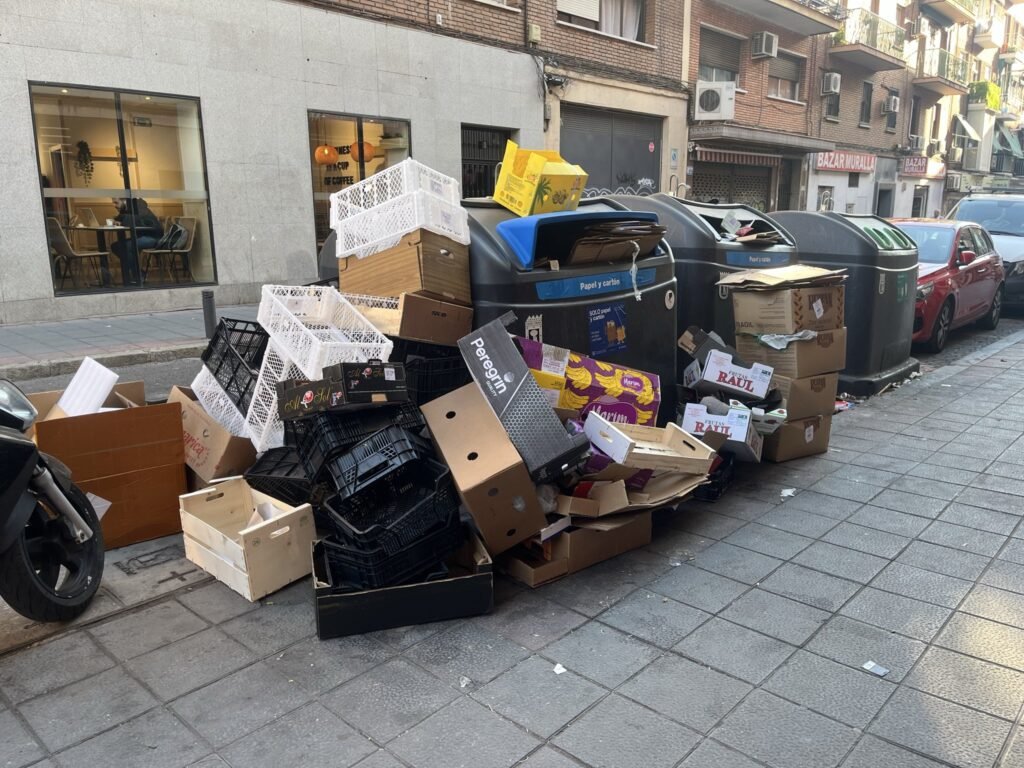
The garbage collection tax (Tasa de Basuras) in Madrid for this year is officially scheduled to enter the collection period on October 1. It is worth noting that the legal disputes surrounding this tax have not yet been fully settled. Previously, the High Court of Justice of Madrid (TSJM) ruled parts of the relevant regulations invalid due to the lack of key technical reports, such as a “study on the amount of garbage generated by economic activities,” during their drafting. Currently, the Madrid City Council is waiting for the Supreme Court (Tribunal Supremo) to decide whether to accept the appeal. The Madrid City Council has explicitly stated that even if the relevant regulations are ultimately deemed non-compliant, an automatic refund mechanism will not be triggered for taxes already paid that have entered administrative proceedings without objection.
Upgraded Payment Methods and Service Guarantees
Significant optimizations have been made to payment channels this year. Unlike when the tax was first established and citizens could not set up bank direct debits, currently, about 25% of taxpayers have successfully authorized automatic deductions. Given that this tax collection period overlaps with the processing period for the real estate tax (IBI), the Madrid Tax Agency has deployed special service initiatives in advance.
Based on data from the previous year, the Madrid 010 citizen service hotline (Linea Madrid) handled approximately 900,000 tax-related inquiries, and about 20,000 visits were made to offline offices. Therefore, the City Council will continue to expand its customer service team this year to cope with the peak period. Citizens can also independently check their tax status through the “Madrid Taxpayer Portal” (Portal del Contribuyente).
Relief Policies for Vulnerable Groups and Large Families
In calculating the tax amount, the new regulations incorporate the number of people registered in the municipal census (Empadronamiento) of the residence as a billing criterion for the first time. For specific groups, the government has retained and detailed welfare policies: disadvantaged individuals receiving the Minimum Vital Income (IMV) and the Minimum Integration Income (RMI) will automatically receive a 100% full exemption without needing to make any administrative declarations.
For large families (Familias Numerosas), the Tax Agency will implement a tiered relief mechanism based on the cadastral value of the property:
- Residences with a cadastral value not exceeding 204,000 euros can receive a maximum reduction of 90%;
- For residences with a cadastral value between 204,000 and 408,000 euros, standard large families receive a 50% reduction, and special large families receive an 80% reduction;
- For residences with a cadastral value exceeding 408,000 euros, standard large families receive a 10% reduction, and special large families receive a 30% reduction.
Vacant Properties and Exemption Scope
The policy also clearly defines special real estate that does not generate regular household waste. Garages, storage rooms (Trastero), empty lots, and buildings classified as dangerous structures associated with residences will be completely exempt from this tax.
In addition, for long-term vacant residential properties and commercial premises with no substantial business activities, owners only need to pay a base rate to maintain the “basic availability” of garbage disposal services. However, owners meeting this condition must submit vacancy proof documents to the municipal department annually, and the City Council will simultaneously use the municipal registration system to strictly verify the vacancy status.
