According to data from the 2025 State Prosecutor’s report cited by Spain’s General Union of Workers (UGT), human trafficking in Spain remains unresolved, with its criminal patterns and recruitment methods showing significant mutations. Last year, 1,246 potential human trafficking victims were identified nationwide, a staggering 58% year-on-year increase, with sexual exploitation and labor trafficking emerging as the two core plagues.
Cyber Recruitment and Transnational Transit Hub Role Highlighted
Traditional models of offline deception and illegal detention are gradually being replaced by more covert online recruitment. Human trafficking rings are increasingly utilizing social media platforms and fake online job postings to initiate remote contact while victims are unsuspecting. Many victims only realize they have fallen into a trafficking network after arriving in Spain and losing their personal freedom.
Meanwhile, Spain’s role in the European human trafficking landscape is shifting. Police investigations confirm that some criminal organizations have established Spain as their operational base or core transit hub. After luring victims into Spain, they keep some under local control while waiting for opportunities to transfer others to European countries such as France, Germany, the Netherlands, and Malta.
High Incidence of Sexual Exploitation: Latin American Women as Primary Victims
Among all forms of trafficking, sexual exploitation remains the largest in scale. In 2025, the judicial system registered 804 confirmed victims or individuals at high risk of sex trafficking. The demographic profile is highly concentrated on women, comprising 797 adult women, 4 underage girls, 2 transgender women, and 1 man.
Geographically, victims exhibit clear transatlantic characteristics, with 70% to 80% originating from Latin America. Victims holding Colombian and Venezuelan nationalities alone account for an absolute majority of 54.5%. Furthermore, reports indicate an upward trend in female victims originating from Asian countries such as China, Thailand, and Vietnam in recent years. Recently, a police operation in Cordoba and Caceres confirmed the cruelty of this exploitation chain: a criminal ring led by Brazilian nationals had been forcing multiple South American women into high-intensity sex work under extremely harsh living conditions. Ultimately, all 9 core members of the ring were arrested.
Surging Undercurrent of Labor Exploitation: Male Migrant Workers Face High Risks
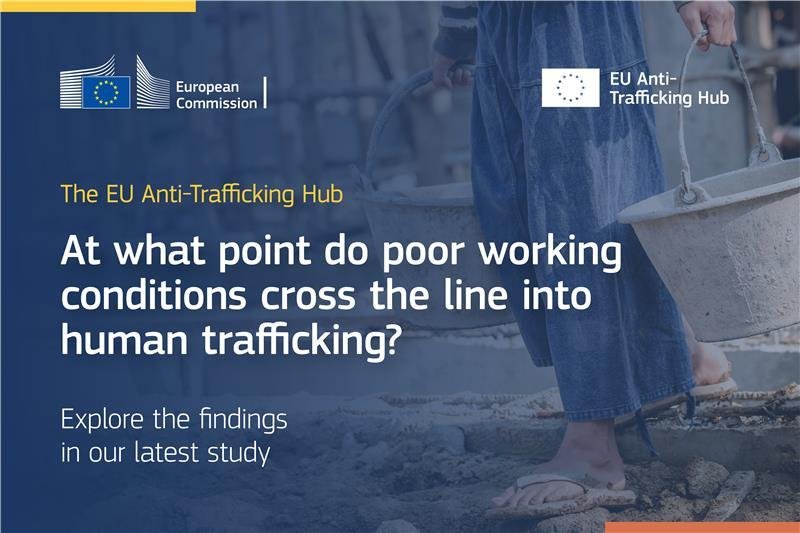
Compared to sex trafficking, the sharp rise in labor trafficking cases in recent years is equally concerning across all sectors. In 2025, prosecutors identified 384 victims of labor exploitation, representing a massive 54.8% increase, with these victims being predominantly male. The tentacles of trafficking have widely penetrated entry-level labor industries such as agriculture, livestock farming, construction, domestic cleaning, and hospitality.
The largest labor trafficking case erupted in the agricultural production zones of Albacete province, where law enforcement identified 267 potential victims in a single sweep. The majority of these victims were Nepali men who, due to vulnerabilities such as language barriers, economic hardship, and lack of legal status, easily fell prey to unscrupulous employers and criminal gangs. Beyond Albacete, similar-scale labor exploitation incidents have been uncovered in Castellon, Murcia, Zaragoza, and Soria. This series of cases indicates that human trafficking has long transcended the limitations of a single industry and is spreading towards greater concealment through the internet and deep-seated social loopholes.
