As autumn arrives in September, the hilltop town of Ujué in central Navarre, Spain, welcomes its traditional cultural experiences and pilgrimage season. This village, which preserves its medieval charm, presents the historical heritage of inland Spain through its unique legends, religious rituals, and traditional rustic cuisine.
Historic Landmark on the Hills of Navarre
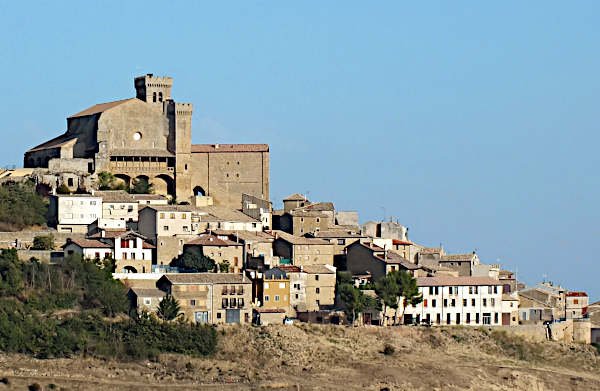
Ujué is situated in the hilly region of central Navarre. The architecture is built into the mountainside, and the streets are mostly paved with rugged, ancient stone slabs. As autumn deepens in September and the summer tourist bustle fades, the town returns to its historic tranquility. The most iconic core structure of the town is the Sanctuary-Fortress of Santa María de Ujué (Santuario-Fortaleza de Santa María de Ujué). This magnificent building, serving both military defense and religious functions, towers over the town center, overlooking the vast surrounding plains and mountains.
The Ancient Legend of the Shepherd and the Dove
The name and historical origins of the town are deeply rooted in local folklore. According to legend, a shepherd grazing his flock near the hills noticed a dove frequently flying into a rock crevice. Following the trail, he discovered a wooden statue of the Virgin Mary deep inside the cave. In the Basque language, the town’s name “Uxue” means “dove.” Historical records show that by the 14th century, the then King of Navarre ordered the wooden statue of the Virgin to be encased in pure silver, officially making it the most central cultural and religious symbol within the sanctuary.
The September Pilgrimage Tradition
Religious and folk activities are an essential part of Ujué’s local culture. In late September every year, the town and its surrounding areas hold a grand traditional pilgrimage. Faithful from neighboring villages walk along ancient trails preserved since the Middle Ages, holding lit candles. Set against the night sky and a gentle breeze, the winding mountain path forms a continuous ribbon of light. This ritual is not only a historical continuation of the local residents’ faith but also provides modern observers with a documentary window into medieval religious life.
Unique Rustic Smoked Cuisine
Beyond its rich historical and cultural heritage, Ujué’s traditional rustic cuisine holds great value for regional studies. The local dining scene is renowned for its aromatic lamb chops roasted over vine shoots, while the most representative culinary craft is the traditional making of sheep cheese. Makers drop red-hot stones directly into containers of raw sheep milk, using the instant high heat to curdle the milk rapidly. This ancient physical processing method imparts a unique, slightly smoked flavor to the cheese, vividly demonstrating the survival wisdom and agricultural dietary characteristics of the early inhabitants of the Navarre region.
