According to a recent market research report released by the Spanish real estate credit institution (UCI), the behavioral patterns of international buyers in the Spanish real estate market are undergoing a profound evolution. Overseas capital is not only demonstrating stronger purchasing power, but the core motivations for buying property have also experienced a structural shift.
Evolution of Purchase Purpose: From Short-term Vacation to Long-term Settlement
Macro data indicates that the logic behind international buyers purchasing property in Spain is no longer the same. In the 2025 residential transaction market, the proportion of foreign buyers already residing in Spain reached 11.6%, a figure that significantly surpassed the 7.2% of non-resident foreign buyers. This data reversal shows that an increasing number of expats are deeply integrating their property investments with long-term work, life, and family planning. The traditional demand for a “second home” and “short-term vacation” is gradually giving way to the need for long-term settlement.
Boost in Purchasing Power: Foreign Buyers Pay a 35% Premium
In terms of transaction volume, foreign buyers have shown more abundant budget space. Statistics point out that in 2025, the average price per square meter for foreign buyers purchasing property in Spain climbed to 2,479 euros, while the average price for local Spanish buyers during the same period was only 1,839 euros, reflecting a difference of about 35%.
Furthermore, the average total transaction price for a single property among the expat group has reached 204,365 euros. Compared to the market level in 2019, this represents a price increase of nearly 40%. This sustained strong purchasing power has had a direct upward effect on the pricing system in regional housing markets where international buyers are highly concentrated.
Expansion of International Customer Base: Influx of Multinational Capital Raises Average Prices
The sources of overseas funds in the Spanish housing market are further expanding and showing a diversified trend. Among the traditional main buying forces, buyers from the UK, Germany, and Morocco still maintain a massive transaction base. At the same time, the activity of investors from the Netherlands, the United States, Belgium, Sweden, and Poland is significantly increasing.
These groups from different cultural backgrounds exhibit high degrees of differentiation in budget ranges, property type preferences, and financing channels. The report specifically notes that buyers from Sweden, the US, Germany, and Switzerland have become the core driving force behind the overall increase in the transaction price per square meter.
Reconstruction of Regional Popularity: Southern Coast Stays Stable, North Gains Favor
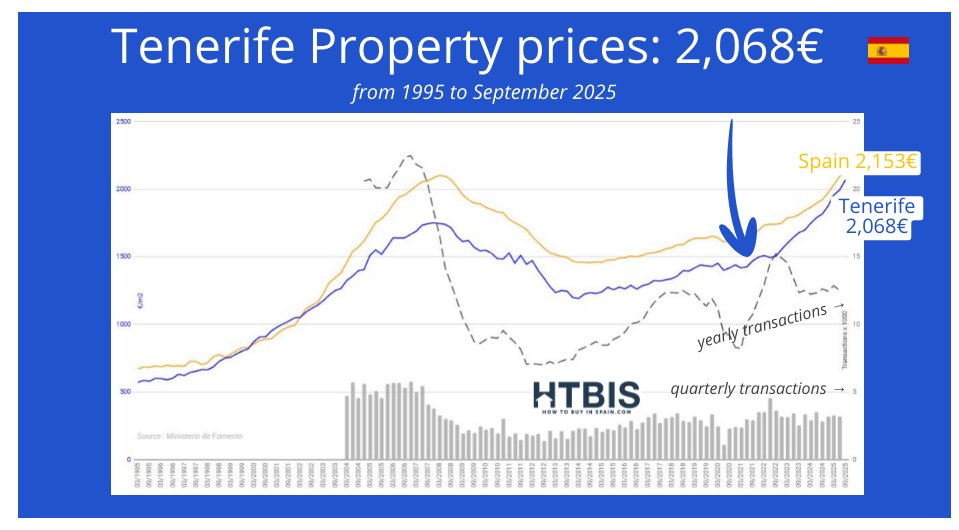
Geographically, the Valencia region, the Balearic Islands, the Canary Islands, and Andalusia remain the core areas for overseas capital inflow, thanks to their climate conditions and mature supporting advantages.
However, it is worth noting that the site selection vision of international buyers is extending to the northern regions of Spain. With the widespread adoption of remote work models, the high quality of life, comprehensive transportation infrastructure, and relatively relaxed housing supply and demand pressure in the northern provinces are gradually becoming important driving forces to attract the emerging group of long-term overseas residents. This trend may provide a new opportunity for the balanced development of the regional real estate market in Spain.
