Recently, the High Court of Justice of Castilla-La Mancha in Spain issued a final ruling, officially annulling a 100-euro speeding ticket issued to a local driver. The verdict clearly stated that when law enforcement agencies use automated radar equipment to collect speed evidence, failing to provide two independent on-site photos as required by law constitutes a procedural violation.
Administrative Lawsuit Triggered by Radar Photos
According to case documents, the driver was recorded traveling at 138 km/h by a fixed radar in a 120 km/h highway zone. Subsequently, the Spanish Directorate-General for Traffic (DGT) issued an administrative penalty notice of 100 euros. In the accompanying evidence files, authorities only provided a single panoramic image of the vehicle on the road and a digitally cropped and enlarged close-up of the same image to show the license plate.
The driver argued that this did not comply with legal evidence standards and filed an administrative lawsuit. Although the initial administrative court ruled that the cropped enlargement was valid for identifying the vehicle and dismissed the claim, the driver persisted and appealed to the High Court of Justice of Castilla-La Mancha.
Law Requires Two Independent Evidence Photos
In the final appeal, the High Court of Justice of Castilla-La Mancha overturned the initial ruling, declaring the DGT’s penalty invalid. The presiding judge cited Spain’s current Metrology Law and related regulations for the use of speed measurement instruments in the verdict. The provisions explicitly state that under the unmanned automated radar operation mode without traffic police present, law enforcement must provide at least two independent images taken at different time points: the first to show the road environment and the entire vehicle, and the second specifically to accurately capture the license plate information.
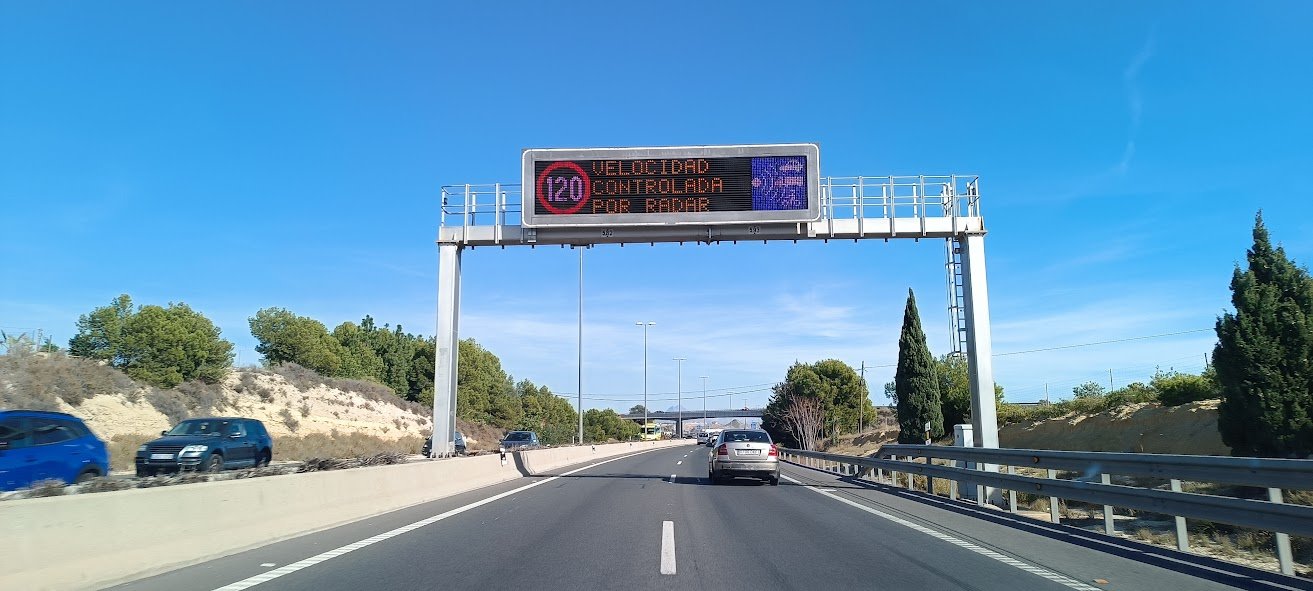
The court emphasized that legally, digitally cropping or enlarging the same original negative cannot replace the function of a second independent photo and cannot be used as independent evidence for cross-verification.
Procedural Violation Deprives Right to Presumption of Innocence
The ruling detailed that the DGT’s act of using a single photo and its enlargement as the sole evidence not only caused flaws in procedural justice but also deprived the individual of the opportunity to verify the core evidence, leaving them unable to effectively defend themselves. This administrative action essentially constituted a severe infringement on the fundamental constitutional right to the presumption of innocence. Based on this, the High Court officially corrected the initial ruling and declared the 100-euro speeding ticket completely void.
Legal Advice for Similar Traffic Fines
This High Court precedent established clear law enforcement boundaries and also highlighted the legal path for drivers dealing with similar traffic disputes. According to Spain’s current metrological technical regulatory system, any radar speed measurement device without on-site supervision by traffic police, when unable to achieve continuous tracking throughout the process, is subject to the “dual independent photo” rule. Legal experts remind drivers that if a received traffic violation notice fails to meet this legal evidentiary threshold, the recipient can file an objection and apply for fine cancellation within 20 calendar days from the date of signing for the notice, legally safeguarding their legitimate rights and interests from infringement.
