Despite the Pedro Sanchez government’s strategic emphasis on expanding investments in Morocco as a key diplomatic and economic initiative in recent years, this plan has yet to see substantial backing from the corporate sector. The latest official data indicates that bilateral capital flows between the two nations are experiencing an unprecedented contraction.
Capital Flows Experience a Steep Decline
According to recent statistics released by the Spanish trade department, total direct investment by Spanish companies in the Kingdom of Morocco amounted to just 3.1 million euros between January and June of this year. Compared to historical data, this figure represents a highly significant downward trend. Data shows that Spain’s investments in Morocco were 61.5 million euros and 95.2 million euros in 2024 and 2025, respectively; even in 2020, which was severely impacted by the global COVID-19 pandemic, the investment volume maintained a high level of 101 million euros.
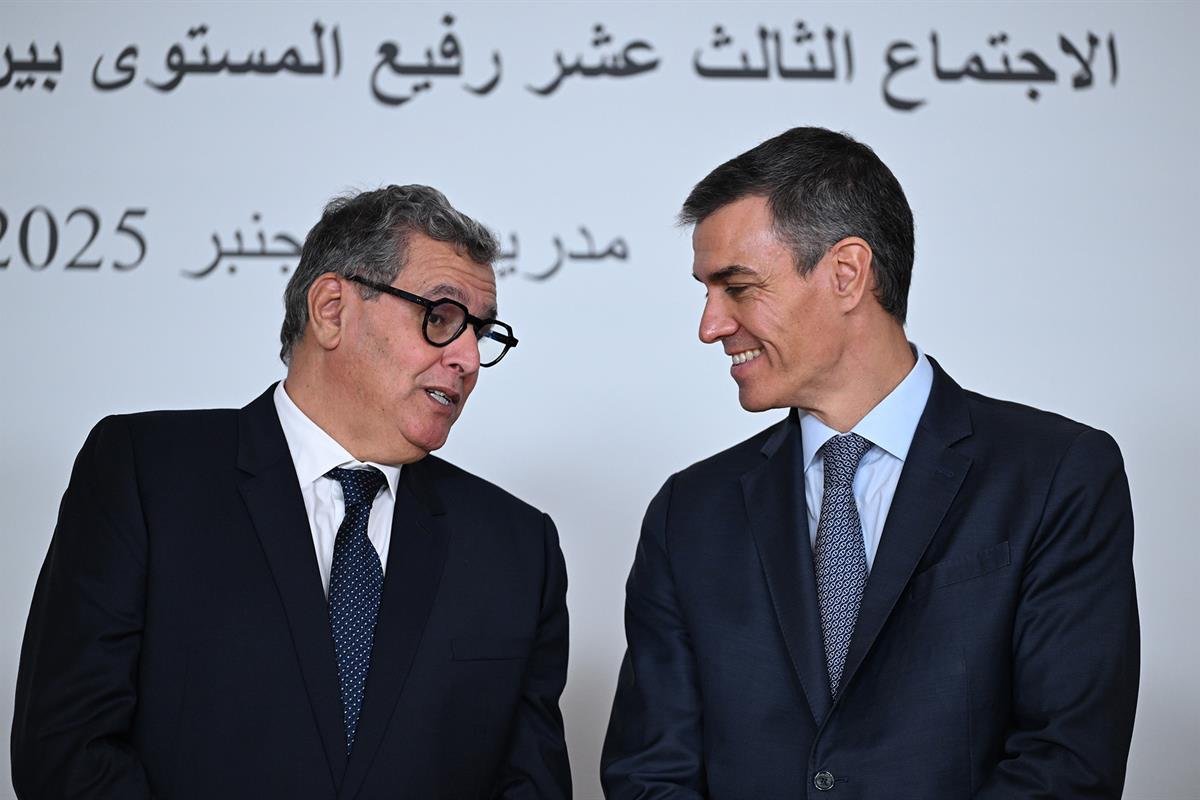
Simultaneously, capital outflow from Morocco to Spain has also sharply contracted. In the first half of this year, investments by Moroccan entrepreneurs in Spain plummeted to a mere 64,100 euros. In the preceding years of 2024 and 2025, these investment figures were maintained at 27.5 million euros and 13.2 million euros, respectively. This synchronized plunge in mutual investment directly reflects a severe lack of confidence in the bilateral market from private capital on both sides.
Official Economic Promotions Yield Minimal Results
To strengthen bilateral economic ties, the Spanish government has repeatedly introduced incentive measures. In 2023, Spanish officials hosted a high-level bilateral conference in the Moroccan capital, Rabat, specifically inviting numerous Spanish corporate representatives. The goal was to guide domestic capital to deeply participate in the Kingdom of Morocco’s newly approved national investment plan, yet the actual conversion rate was extremely low.
Faced with the current investment slump, sources indicate that the Spanish government is preparing to host a new round of large-scale corporate networking events in Rabat. This upcoming promotion will heavily leverage the opportunity of the 2030 FIFA World Cup, jointly hosted by Spain, Morocco, and Portugal. It attempts to use large-scale transnational infrastructure construction and event dividends as “bait” to reactivate Spanish capital’s interest in the Moroccan market.
Geopolitical Games and Border Crises Exacerbate Uncertainty
The cooling of economic relations is closely linked to the complex regional geopolitics of recent years. Previously, the Pedro Sanchez government adjusted its stance on the Western Sahara issue to show goodwill toward Morocco, a move that triggered strong protests from Algeria. As a countermeasure, Algeria severed the Maghreb-Europe gas pipeline that ran through Morocco to Spain. Although diplomatic relations between Spain and Algeria have somewhat repaired recently, Spain’s strategic balance in North Africa remains tested.
During this period, while Spain’s trade surplus with Morocco maintained a slight edge and exports showed moderate growth, it failed to stimulate deep-tier investment. More severely, at the end of July this year, up to 80,000 Moroccan citizens suddenly surged into the Spanish enclave of Ceuta, triggering a severe border immigration crisis. Currently, officials have not released specific data on how this incident impacts bilateral imports, exports, and mutual investments. However, daily traffic and logistics operations at the Port of Ceuta have already been significantly disrupted, undoubtedly casting a new shadow over the fragile economic trust between the two countries.
