Debt Scale Climbs While GDP Ratio Falls
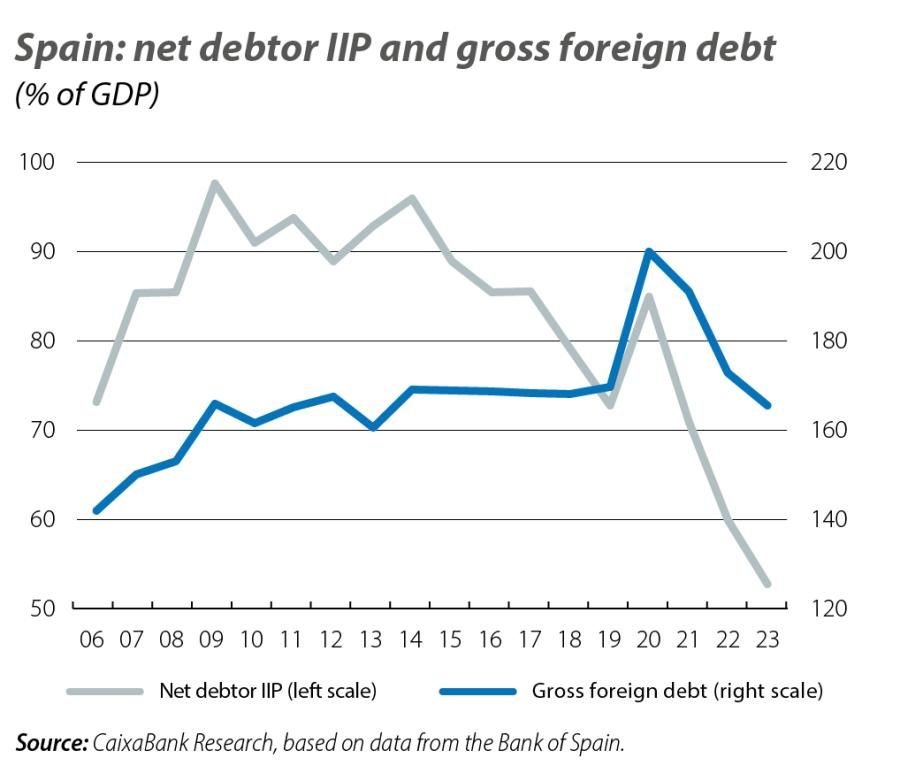
According to data released by the Bank of Spain, the debt scale of Spanish public administrative institutions at all levels increased by 23.295 billion euros in the second quarter of 2026 compared to the previous quarter, bringing the cumulative total to 1.76 trillion euros. This core indicator has once again broken historical records, indicating a continuous expansion of public sector financing needs. However, offset by the growth in gross domestic product driven by macroeconomic recovery, relative debt indicators have improved. The debt-to-GDP ratio fell by 1.8 percentage points compared to the same period last year, dropping to 101.4%.
Current Status of Central Government and Social Security System Debt
Within the national fiscal system, the central government remains the absolute mainstay of the debt stock. By the end of the second quarter, accumulated central government debt reached 1.613 trillion euros, up 4.2% year-on-year, maintaining a 92.8% share of the GDP.
Simultaneously, the debt scale of the social security system reached 136.178 billion euros, representing a year-on-year increase of 7.9% and equivalent to 7.8% of the GDP. The significant rise in the system’s debt is partly due to continuous credit support provided by state finances to the social security system to bridge the budget gap created by the pension system.
Significant Polarization in Regional Debts
At the level of autonomous communities, accumulated debt in the second quarter reached 355.241 billion euros, accounting for 20.4% of the national GDP. This represents an increase of 8.312 billion euros from the previous quarter and a year-on-year growth of 12.442 billion euros. There is severe polarization in the debt pressure across different regions:
The Valencian Community (Comunidad Valenciana) leads the nation with a debt-to-GDP ratio of 40%, closely followed by the Region of Murcia (Región de Murcia) at 30.8%, and Catalonia (Cataluña) and Castilla-La Mancha (Castilla-La Mancha) at 28.1%. In contrast, five autonomous communities—Navarre (Navarra), the Canary Islands (Canarias), the Basque Country (País Vasco), Madrid (Madrid), and Asturias (Asturias)—have all kept their debt ratios below the reference warning line of 13%.
Municipal Government Debt Shrinks Against the Trend
Unlike the continuous growth trend of central and regional debt, the debt of Spanish municipal governments has seen an overall contraction. Total debt fell to 21.394 billion euros, a significant year-on-year decrease of 8.3%, accounting for only 1.2% of the GDP.
Among large cities with populations exceeding 300,000, the overall debt scale was slashed by 18.9% year-on-year, dropping to the 4.5 billion euro level. In absolute terms, the Madrid city government carries about 1.5 billion euros in debt, Barcelona about 1.2 billion euros, and Zaragoza about 500 million euros. Measured by debt per capita, Zaragoza ranks as the most indebted large city at 724 euros per person, with Barcelona (711 euros) and Murcia (530 euros) taking the second and third spots respectively. Meanwhile, Las Palmas (Las Palmas de Gran Canaria) has achieved a debt-free operation.
