Revoked Overnight: Emergency Decrees Repealed Just One Day After Implementation
Recently, Spanish society has witnessed widespread protests triggered by the eviction of elderly tenants, with Madrid’s Puerta del Sol temporarily occupied by protesters’ tents. To appease public dissatisfaction, the Spanish government urgently issued two royal decrees on September 29, 2026, aimed at protecting vulnerable tenants. The new regulations were subsequently published in the Official State Gazette (BOE) and officially came into effect on October 1. However, just one day later on October 2, the Spanish Congress of Deputies voted to repeal both decrees in their entirety.
The first repealed decree, Royal Decree-Law 26/2026 (Real Decreto-ley 26/2026), focused on “adopting emergency measures to protect the social function of housing and expanding the supply of affordable housing.” This bill was ultimately rejected with 172 votes in favor and 178 against. The second decree, Royal Decree-Law 27/2026 (Real Decreto-ley 27/2026), primarily targeted the stability of standard residential lease contracts. Its voting result was even more lopsided, with 166 votes in favor and 184 against.
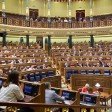
With the repeal of the decrees, several planned protective measures became invalid. These included eviction protection for vulnerable groups, restrictions on home purchases by institutional investors, new rules for seasonal and room rentals, automatic lease extension mechanisms, and new tax incentives for landlords and tenants.
Congressional Battles: Regional Parties Become the Key Minority
The defeat of these housing decrees stemmed from a combined opposition of right-wing parties and some regional nationalist parties. In the vote on Royal Decree-Law 26/2026, Spain’s largest opposition party, the People’s Party (PP), the far-right Vox, and the Navarrese People’s Union (UPN) all cast dissenting votes. More crucially, the Catalan regional party “Together for Catalonia” (Junts), which had previously cooperated with the ruling Spanish Socialist Workers’ Party (PSOE) on multiple issues, defected during this vote, directly sealing the 178-vote opposition.
During the vote on the second decree, the opposition camp expanded further. In addition to the aforementioned parties, the Basque Nationalist Party (PNV) and the Canarian Coalition (Coalición Canaria) also joined the opposition, pushing the dissenting votes up to 184. This voting outcome was not only a rejection of the specific decrees but also reflected the fragile situation currently facing the ruling coalition in parliament.
Political Strategy: Paving the Way for Early Elections?
Although the bills failed to pass, political analysts point out that the left-wing government led by Prime Minister Pedro Sánchez might turn this into political leverage. Under the shadow of negative events such as the Ceuta immigration issue and corruption controversies, the ruling party desperately needs a breakthrough to consolidate voter consensus.
By forcing through the housing protection decrees, the government successfully portrayed itself as the “protector of vulnerable tenants.” Following the bills’ rejection, the left-wing bloc seized the opportunity to label the right-wing and opposition as “indifferent to livelihoods and obstructing the housing of the lower classes.” Facing the upcoming 2027 general elections, this is seen as a strategic retreat to gain the upper hand. Some left-wing figures have even suggested taking advantage of the currently boiling social sentiment to trigger early elections. At present, the Sánchez government has officially announced a “period of analysis and reflection,” neither explicitly denying the possibility of early elections nor making a final decision.
Deep-Seated Crisis: The Dual Squeeze of Population Surge and Supply-Demand Imbalance
Setting aside the noise of political maneuvering, the root of Spain’s housing crisis lies in a severely imbalanced supply and demand. Statistical data shows that over the past decade, Spain’s total population has surged from approximately 46.5 million in 2016 to the current 49.8 million, with an average annual net increase of 400,000. However, during the same period, the annual delivery of new housing nationwide has been less than 100,000 units.
Against the backdrop of severe supply shortages, government-led public housing construction remains sluggish. For instance, the highly anticipated “Operation Campamento” (Operación Campamento) in Madrid, despite involving massive tracts of unused land owned by the Spanish Ministry of Defense and the Ministry of Transport, is planned to provide only over 10,000 housing units—a drop in the bucket. In stark contrast, policies continuously exert pressure on private landlords, attempting to solve social problems by restricting rent increases and banning evictions.
Economists and real estate insiders warn that the volatile, overnight policy changes are severely undermining long-term investment confidence in the Spanish real estate market. Faced with an increasingly stringent rental environment and potential default risks, landlords are highly likely to opt out of the rental market or raise screening thresholds for tenants. Ultimately, the truly vulnerable families lacking risk resistance will face even harsher housing challenges in an ever-shrinking rental market.
