Just back from Andalusia, and my mind is still filled with its incredibly beautiful architecture! Before coming to Spain, I always thought of it as a land of sun, sand, and tapas. But after visiting, I discovered that the true soul of Spain is the history carved into its stone buildings. Every ancient city, every old house, is like a heavy history book. Walking through them, you can almost hear the echoes of a thousand years past.
The Roman Footprint: Masterpieces of Power and Order
To talk about Spain’s history, we have to start with the Romans. Over two thousand years ago, they left behind incredible engineering marvels. The most breathtaking for me was the Roman Aqueduct of Segovia. When you see for yourself how those massive stones were fitted together so perfectly without any mortar, spanning an entire valley, the sheer sense of power and engineering aesthetics will leave you in awe of ancient wisdom. It’s not just a ruin; it’s the living, breathing artery of the city of Segovia.
The Moorish Dream: A Labyrinth of Delicacy and Splendor
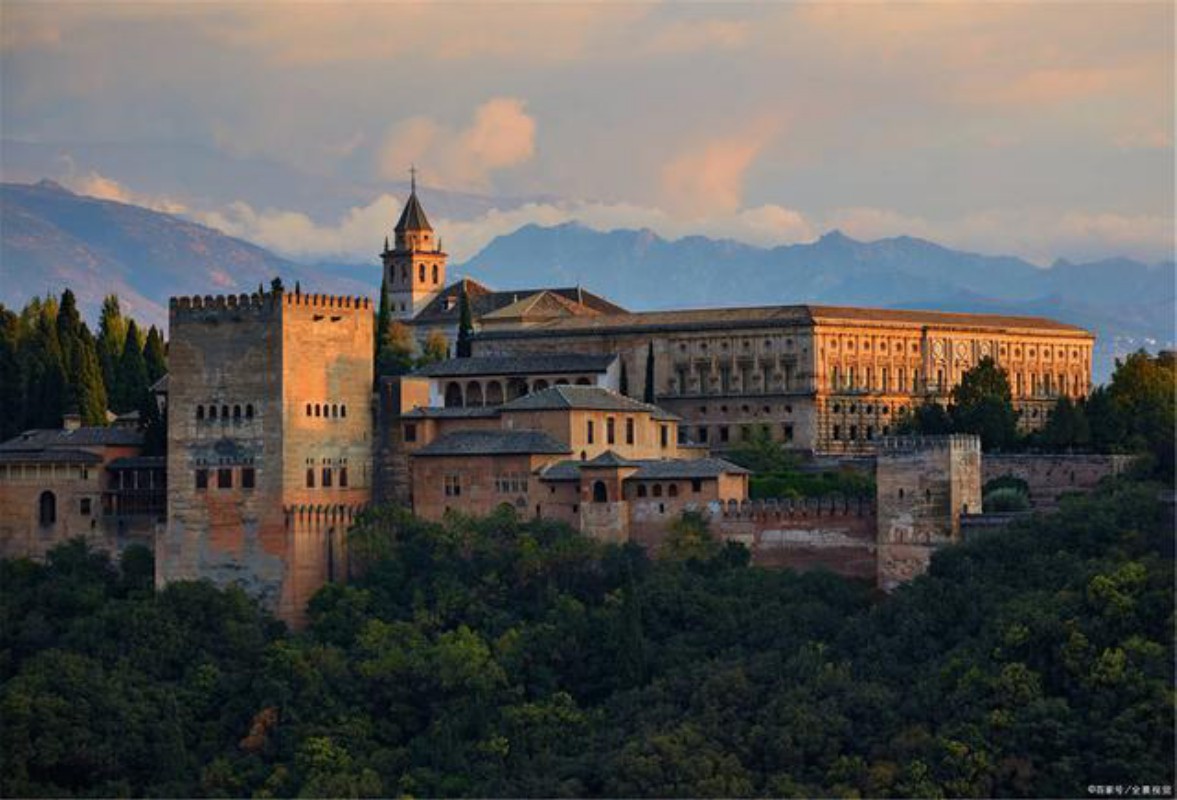
If Roman architecture symbolizes power, then Moorish architecture, like the oldest buildings in Spanish history, is a dream of exquisite detail. The highlight of my trip was the Alhambra Palace in Granada. Stepping into the Court of the Lions, watching the sunlight filter through carved lattices onto the pool, surrounded by intricate, masterfully crafted geometric patterns and Arabic calligraphy, you’re truly at a loss for words. The azure blue tiles paired with gold accents shimmer and change in the light, a breathtaking sight!
The Glory of Catholicism: Faith Reaching for the Sky
With the Reconquista, architectural styles shifted dramatically. Majestic Gothic cathedrals rose up, becoming the most prominent landmarks in the cities. Take the Seville Cathedral, for example. Its soaring presence and vast interior space instantly make you feel small in the face of immense faith. Sunlight streams through the enormous stained-glass windows, bathing the entire cathedral in a sacred, ethereal light. Of course, when talking about Spanish architecture, we can’t forget Gaudí in Barcelona. His Sagrada Família can be seen as a fantastical, modern continuation of the Gothic style, offering a completely different kind of awe-inspiring experience!
A Quick Guide to Major Spanish Architectural Styles
To make it easier to understand, I’ve put together a simple summary table:
| Architectural Style | Key Cities | Core Features |
|---|
| Roman | Segovia, Mérida | Grandiose, functional, arch structures |
| Moorish | Granada, Córdoba | Intricate, complex, horseshoe arches, geometric tiles |
| Gothic | Seville, Toledo | Soaring, spires, flying buttresses, stained glass |
| Modernisme | Barcelona | Curvy lines, natural forms, vibrant colors |
The charm of Spanish architecture lies in this collision and fusion of diverse cultures. Traveling from one city to another feels like journeying through different historical eras. What other unforgettable ancient Spanish buildings have you visited? Share your photos and stories in the comments section below!
