Hello everyone! For those of you new to Spain, do you often find yourselves in city squares, historical sites, and museums, looking at statues and paintings of historical figures without really knowing their stories? To better understand the land we now live on, I’ve taken the time to compile a timeline of major events in Spanish history. I hope it helps you quickly build a historical framework.
Ancient and Medieval Times: The Foundations of a Civilization
Spain’s history dates back to the Roman period. The Romans brought their language, laws, and magnificent architecture, and you can still see the remains of Roman aqueducts and theaters in places like Mérida and Segovia today. After the fall of the Roman Empire, the Visigoths held a brief rule until 711 AD, when the Moors from North Africa crossed the Strait of Gibraltar. This marked the beginning of nearly 800 years of rule over the Iberian Peninsula, establishing the famous Al-Andalus civilization and leaving behind a splendid Islamic cultural legacy, especially in Córdoba, Seville, and Granada.
Unification and Golden Age: The Rise of an Empire
From the moment the Moors set foot on the Iberian Peninsula, the Christian kingdoms in the north began the long Reconquista. This campaign culminated in the marriage of Queen Isabella I of Castile and King Ferdinand II of Aragon, which laid the groundwork for a unified Spain. The pivotal year of 1492 saw three major events: the fall of Granada, marking the end of the Reconquista; the sponsoring of Columbus’s voyage, which led to the “discovery” of the Americas; and the expulsion of the Jews to consolidate Catholic rule. This ushered in Spain’s “Golden Age.” Vast amounts of gold and silver were shipped back from the Americas, and Spain became the world’s foremost power.
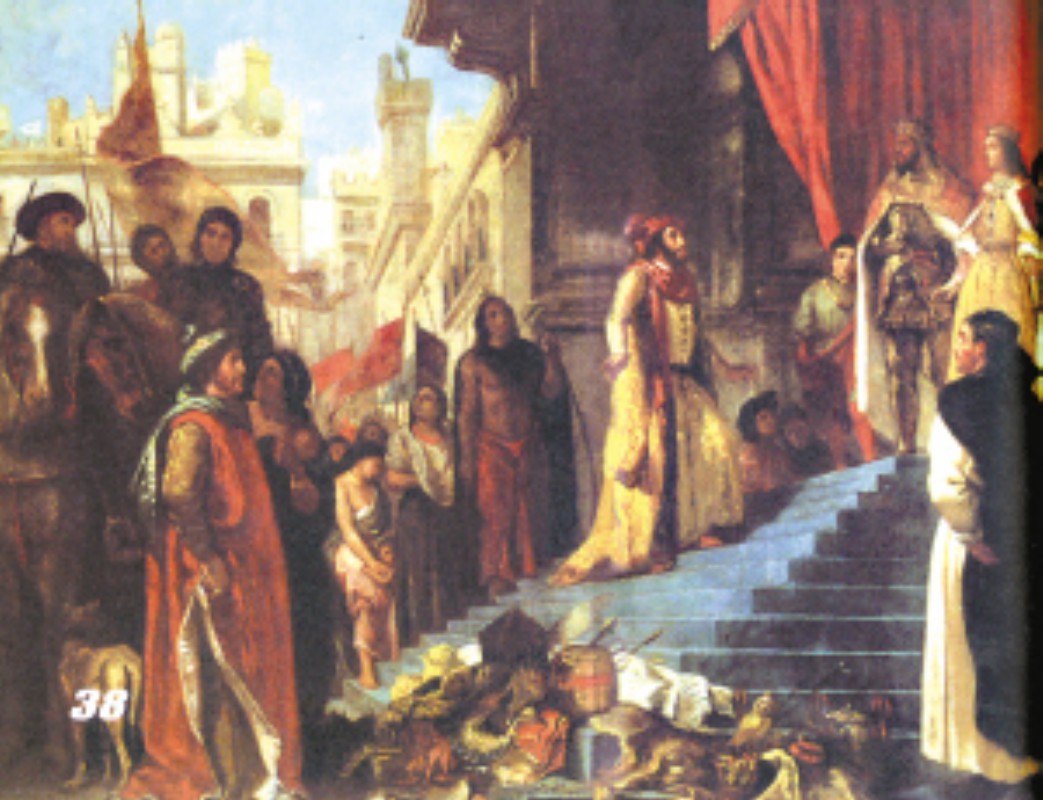
The table below will help you better understand the key events around the year 1492:
| Date | Key Event | Historical Impact |
|---|
| 711 AD | Moorish Invasion | Islamic forces rule most of the Iberian Peninsula, beginning the Al-Andalus civilization. |
| 1479 | Marriage of Isabella & Ferdinand | The kingdoms of Castile and Aragon merge, accelerating the unification of Spain. |
| 1492 | Fall of Granada | The Reconquista ends, and Spain is politically unified. |
| 1492 | Columbus’s Voyage | Begins the Age of Discovery and Spanish colonial expansion, leading to the Golden Age. |
Modern Era: Turmoil and Transformation
The empire’s glory did not last forever. The defeat of the Spanish Armada, the War of the Spanish Succession, the Napoleonic invasion, and the successive independence of American colonies in the 19th century led to a gradual decline in Spain’s power. In the early 20th century, social conflicts intensified, culminating in the brutal Spanish Civil War in 1936, which led to Francisco Franco’s dictatorship lasting nearly 40 years. It wasn’t until Franco’s death in 1975 that King Juan Carlos I guided Spain through a peaceful transition to democracy. The country successfully joined the European Union in 1986, opening a new chapter in its national development.
In short, Spain’s history is full of dramatic ups and downs, from imperial glory and the trauma of civil war to its present-day democracy and openness. Once you have an understanding of these events, perhaps by reading A Brief Timeline of Spanish History, looking at ancient buildings and works of art will feel completely different. Which period of history are you most interested in? Feel free to share your thoughts and discuss in the comments below!
