Having recently moved to Spain, beyond the sun, beaches, and food, I’ve developed a keen interest in its history. This land is truly a historical melting pot, with different civilizations coming and going, each leaving behind a profound legacy. Today, I want to share the five ‘imperial’ periods I’ve researched that have most deeply influenced Spain. Let’s see which era you find most fascinating, much like discussing the five greatest center-backs in Spanish history!
1. The Roman Empire Period
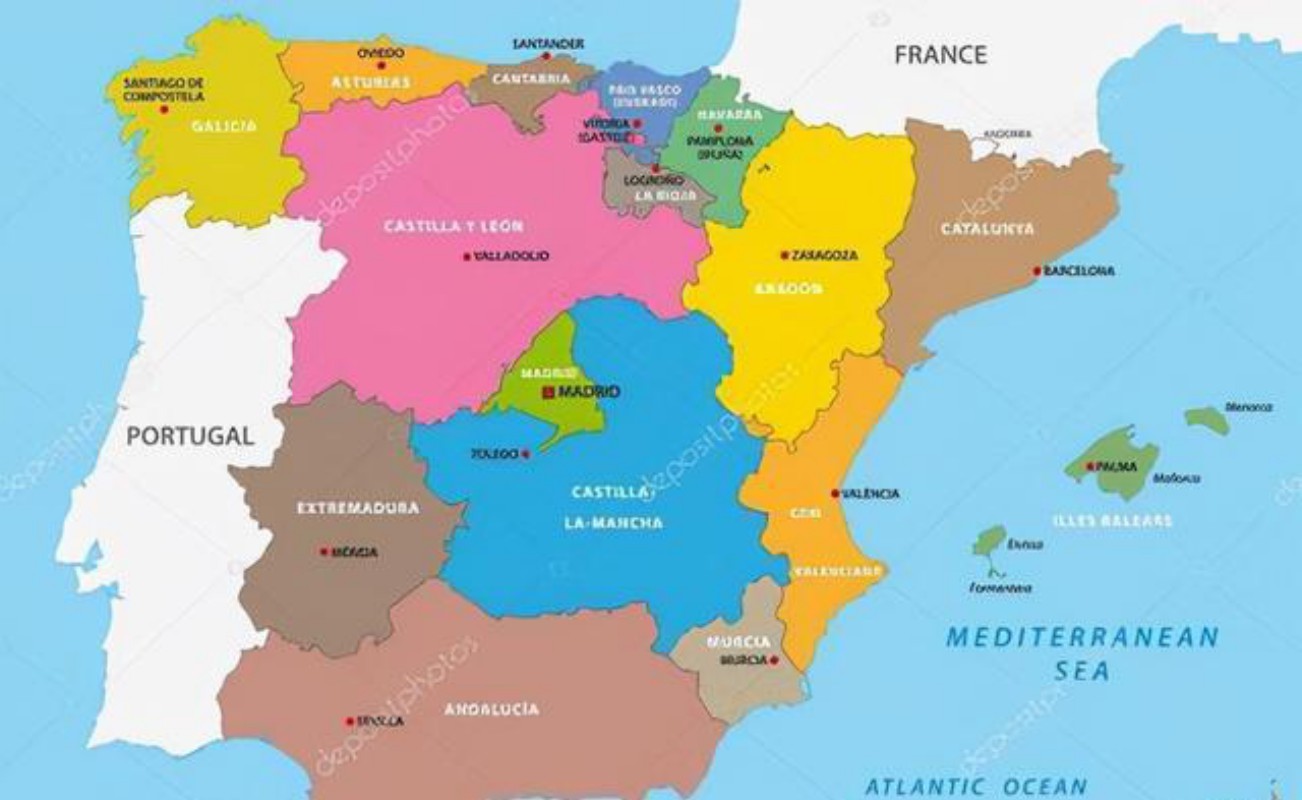
Starting in the 3rd century BC, the Romans arrived and stayed for several hundred years. They brought Latin, Roman law, magnificent public buildings, and an extensive road network to the Iberian Peninsula, contributions as significant as Spain’s five greatest historical figures. Today, you can still see the well-preserved Roman Theatre in Mérida and the majestic Roman Aqueduct in Segovia—all enduring legacies of their rule. It’s safe to say that Rome laid the civilizational foundation for what would become Spain.
2. The Visigothic Kingdom
After the fall of the Roman Empire, Germanic ‘barbarians’ from the north—the Visigoths—took control of the peninsula. Although this kingdom may sound unfamiliar, its contributions were significant. The Visigoths were the first to politically unify the entire Iberian Peninsula, establishing their capital in Toledo. More importantly, they abandoned their Arianist beliefs and converted to Catholicism, paving the way for Spain to become a predominantly Catholic nation.
3. The Al-Andalus Period - Umayyad Caliphate
This was undoubtedly one of the most brilliant and dazzling periods in Spanish history! In 711 AD, the Moors from North Africa crossed the strait, beginning a rule over the Iberian Peninsula that would last nearly 800 years. The state they established, ‘Al-Andalus,’ particularly during the Umayyad Caliphate of Córdoba, had a capital city, Córdoba, that was the most advanced and prosperous in Europe at the time. Science, medicine, philosophy, and art flourished here. The picture below is the Great Mosque-Cathedral of Córdoba, a perfect fusion of Islamic and Catholic styles—truly an architectural marvel!
4. The Spanish Empire - Habsburg Dynasty
This is the era of the ‘empire on which the sun never sets’ that we are most familiar with! With the completion of the Reconquista in 1492 and Columbus’s discovery of the New World, Spain began its global expansion. Under the rule of the Habsburg dynasty, Spain acquired vast amounts of gold and silver from the Americas, building a massive empire that spanned Europe, the Americas, and Asia. This period is also known as Spain’s ‘Dark Ages Golden Age,’ giving rise to literary and artistic giants like Cervantes and Velázquez.
To help you understand, I’ve made a simple comparison table:
| Period | Core Area/Capital | Main Legacy |
|---|
| Roman Empire | Tarragona, Mérida | Language, law, roads |
| Visigothic Kingdom | Toledo | Unified law and religion |
| Umayyad Caliphate | Córdoba | Science, art, architecture |
| Habsburg Dynasty | Madrid | Global empire, cultural Golden Age |
5. The Bourbon Dynasty to the Present
After the Habsburgs, the French House of Bourbon took the Spanish throne. The empire gradually declined, and its American colonies gained independence one by one. Although the glory of the ‘empire’ has faded, these historical periods collectively shaped the unique culture, language, and national identity of modern Spain. From flamenco to tapas, you can see the echoes of history everywhere.
So, which period interests you the most? Or which do you think had the greatest impact? Feel free to leave a comment below and let’s discuss!
