Last Black Friday, I brought home a whole Iberian ham, hoping to achieve “ham freedom.” However, I soon realized that my Chinese cleaver and Western chef’s knife simply didn’t cut it! The meat slices were thick and torn, truly a waste of good ham. Later I learned that to slice Spanish ham properly, you must have a professional ham knife called the Cuchillo Jamonero. It’s not just a tool but an enjoyable ritual of savoring food.
The so-called “ham knife” refers specifically to a long, narrow blade that is very thin and flexible. Typically, its length ranges from 24 to 30 centimeters. Why this design? It allows the knife to closely follow the ham’s surface, effortlessly slicing paper-thin, melt-in-your-mouth ham slices. The blade’s flexibility lets you adjust the angle according to the shape of the ham while cutting — something that Spanish ham slicing methods done with regular rigid knives cannot achieve.
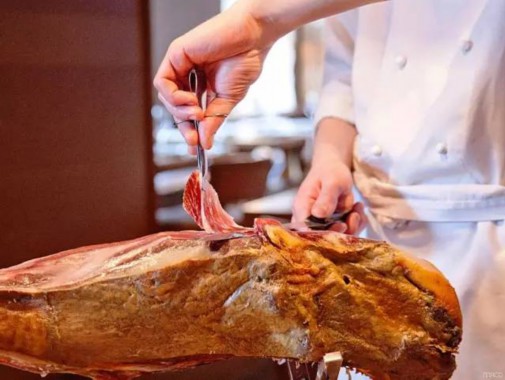
At first, the selection was overwhelming, with prices ranging from a dozen euros to over a hundred. Here is a Spanish ham slicing toolkit and I’ve compiled a simple Spanish ham slicing guide to assist everyone:
How to Choose Your First Ham Knife
| Key Points | Description | Personal Advice |
|---|
| Blade Length | Typically 24cm–30cm | Beginners should start with 25–28cm; too long is hard to control, too short is inconvenient for large ham pieces. |
| Blade Material | Mainly stainless steel | Choosing “NITRUM” special stainless steel offers more durability and sharpness, such as the Spanish brand Arcos. |
| Blade Surface Style | Smooth or grooved | Grooves prevent meat from sticking to the blade—highly recommended! Makes slicing much smoother. |
| Handle Material | Plastic, polyoxymethylene (POM), wood, etc. | Prioritize slip resistance and grip comfort. POM is durable and hygienic, favored by many professionals. |
One primary slicing knife is not enough. A full “ham slicing” set typically also includes:
Ham Slicing Accessories
- Boning Knife: Short, sturdy, and sharply pointed, used for breaking down the ham and removing bones.
- Sharpening Steel: Stroking your knife on this before each slicing session restores sharpness. Very important!
- Ham Holder: This goes without saying — a rack to secure the ham; without it, slicing is nearly impossible.
Finally, some hard-earned tips on use and care. Safety first! Always keep your hand that is not holding the knife behind the blade while cutting. The knife must be sharp—a dull knife is more prone to slipping and causing injury. After use, wash it by hand immediately and dry it thoroughly. Never put it in the dishwasher, as high heat and moisture will ruin your knife. Then cover it with a sheath or store it in a dedicated knife holder.
Investing in a good knife is definitely worthwhile. What brand of ham knife do you use? Or do you have any slicing tips? Feel free to share below and let’s learn from each other!
