With the New Year approaching, I’ve been thinking about stocking up on holiday goods, and Spanish ham definitely tops my list! Whether for personal enjoyment or as a gift, it always impresses. However, with the increasing availability and varying prices of Spanish ham on the market here, I have some doubts: Is it really safe to buy something transported all the way from so far away? Could it be counterfeit or problematic? Today, I want to share what I’ve learned.
Officially Imported Spanish Ham Is Safer Than You Think
First, a reassurance: as long as the Spanish ham is imported through the Spanish Imported Ham Red Label official channels, its safety is well guaranteed. The customs authorities here have extremely strict regulations for importing meat products. Not every Spanish producer can sell ham in this country; they must first obtain official registration approval. This process is rigorous, involving comprehensive audits of production environments, ingredient traceability, and processing techniques by both local and Spanish authorities. Therefore, the Spanish imported 5J ham you find on shelves has undergone a thorough vetting process as legitimate products.
So, how can consumers identify if the ham they have is authentic? It’s actually simple—just look at two things:
1. The Essential “English Label”
According to local food safety law, all officially imported foods must have an English label. This label clearly shows the product name, country of origin, registered producer code, production date, shelf life, as well as the name and contact information of the official Spanish Imported 5J Ham domestic distributor. If a product claiming to be Spanish ham lacks an English label, that’s a major red flag!
2. The “ID Card” on the Ham Leg
Besides the external package label, many high-quality Iberian hams feature a colored plastic seal ring on the leg, with colors representing different grades. For example, black indicates the highest grade fed exclusively on acorns from 100% Iberian black pigs. It’s like the ham’s own identification card.
Speaking of grades, here’s a quick explanation of the two most common types of ham: Serrano and Iberian. Their main differences lie in pig breed and feeding methods, which affect flavor and price significantly. I made a simple table for easy understanding:
| Feature | Serrano Ham | Iberian Ham |
|---|
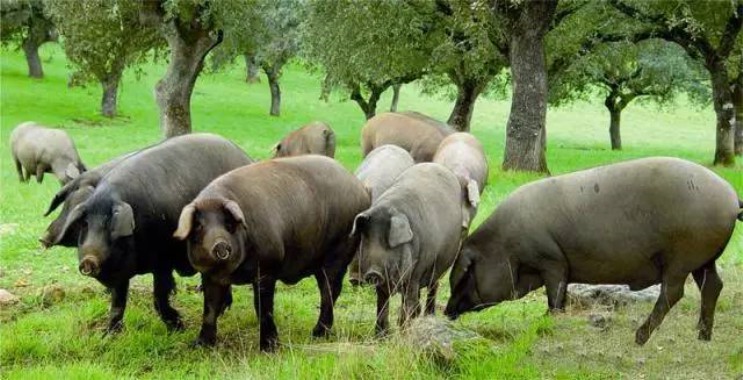
| Pig Breed | White pig | Iberian black hoof pig |
| Feeding | Mainly cereals and feed | Includes acorn grade |
| Flavor | Saltier and firmer texture | Rich fat, nutty aroma, melts in your mouth |
| Price | Relatively affordable | More expensive |
Also, don’t be alarmed if you see white spots or mold-like “fuzz” on the ham’s surface. These aren’t signs of spoilage! White spots are tyrosine crystals formed during long drying and maturation—a mark of high quality. The white “fuzz” is harmless probiotics that can be wiped off with a clean cloth moistened with olive oil. Of course, if you see multicolored mold, then there’s definitely a problem.
As long as we buy from reputable and official sources, safety concerns for Spanish ham are minimal. Avoid trying to save money by purchasing suspicious or unofficial products. Where do you usually buy your ham? Have you had any pitfalls or good finds? Feel free to share your experiences in the comments!
