When I first arrived in Spain, I often heard people say that ham here is a national treasure, and like fine wine, the older it ages, the better it tastes and the higher the price. I used to believe this myself and always tried to pick the oldest vintage whenever I bought ham, feeling that was the most “authentic”. However, after chatting with some local food experts and ham masters, I realized this idea is actually a big misconception!
In fact, Spanish ham does not improve indefinitely with age. Each ham has an optimal tasting period, which we call the flavor equilibrio. At this point, the ham’s saltiness, aroma, oiliness, and tender texture reach a perfect harmony. If the Spanish imported ham red label curing time is too long, the ham can lose too much moisture, leading to dry meat, overly salty taste, and even unpleasant “rancid” notes caused by excessive fat oxidation. Chasing extreme flavors might turn out to be a loss with Spanish imported 5j ham.
Good Jamón Ibérico is recognized by its beautiful marbling and evenly distributed fat. If aged too long, this oiliness disappears.
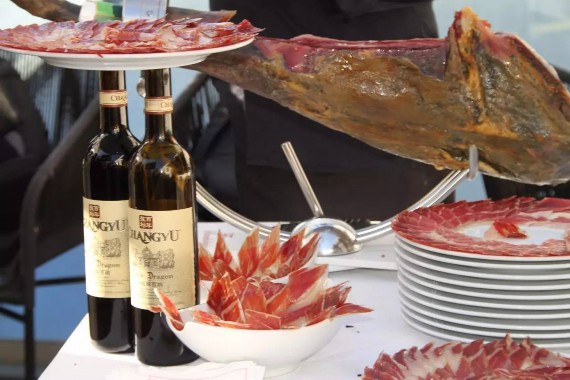
Look at these thin slices—the fat slowly melts at room temperature, shining with an enticing gloss. This is the ideal state!
The Relationship Between Ham Grade and Curing Time
The aging time of ham largely depends on its grade and the leg it comes from. Generally, higher quality and larger hind legs require longer curing times; front legs, being smaller, are cured for shorter periods.
Here is a simple table summarizing the official minimum curing times for different grades of Jamón Ibérico:
| Ham Label Color | Grade | Breed and Rearing Method | Minimum Curing Time |
|---|
| Black | Bellota 100% Ibérico | 100% Iberian black pigs, acorn-fed | 36 months |
| Red | Bellota Ibérico | 50%/75% Iberian pigs, acorn-fed | 36 months |
| Green | Cebo de Campo Ibérico | Iberian pigs, mixed feed + pasture | 24 months |
| White | Cebo Ibérico | Iberian pigs, mixed feed indoors | 24 months |
Note: This is only the minimum curing time. Many top ham producers may extend the curing period depending on the climate and specific ham conditions each year, but usually not by much.
So when choosing ham, such as the Spanish imported ham 5j, don’t just focus on the “aged XX years” label. It is more important to look at the grade, the fat distribution, and select according to your personal taste. Some people prefer hams cured for a shorter time with juicier textures!
After all this, I wonder which type of ham you all prefer? Are you fond of the rich nutty aroma of the black label, or do you find the green label offers the best value? Feel free to share your “ham experiences” in the comments!
