When I first arrived in Spain, I often heard people say how delicious Jamón is and that every household hangs one during festivals. At first, I thought it was just ordinary salted meat, but after learning more about the Spanish Iberian ham slicing, I realized how wrong I was! A premium Iberian ham is truly a work of art, a fusion of time, nature, and craftsmanship. Today, let’s explore how this Spanish national treasure is born.
Step One: The Pig’s “Happy Life”
Everything begins with a unique pig—the Iberian black hoof pig. This is not just any domestic pig but an ancient European breed. For premium ham, pigs must be raised freely in Spain’s distinctive Dehesa oak pastures. Every autumn, these “black hoof brothers” roam freely, mainly feeding on fallen acorns. It’s these acorns that give the ham its unique nutty aroma and melt-in-the-mouth fat. Simply put, no happy pig means no top-tier ham.
Step Two: Salting and Drying
Once the pig leg is cut, it enters a crucial phase. First is the salting process: artisans completely cover the ham with sea salt to dehydrate and initially preserve it. This step requires strict control of temperature and humidity, and the duration depends entirely on experience. After salting, the surface salt is washed off, and the ham is sent to the drying room. Here, moisture further evaporates, and the fat begins fascinating initial transformations. This stage typically lasts for several months.
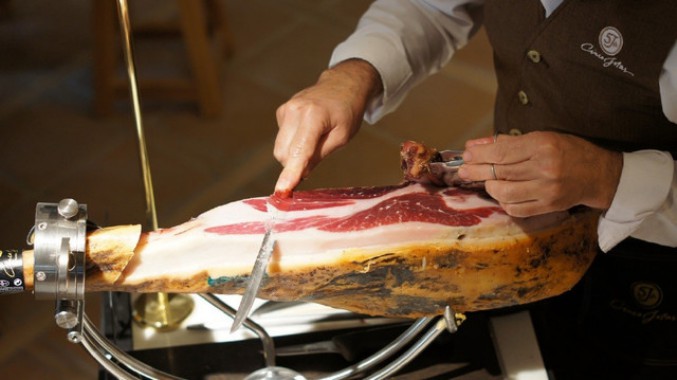
Step Three: The Magic of Time – Cellar Aging
If drying lays the foundation, then cellar aging is the finishing touch. The ham is transferred to a naturally temperature- and humidity-controlled cellar to begin a long maturation process lasting from two to as many as four or five years. During this time, complex biochemical reactions occur inside: proteins break down into flavor-enhancing amino acids, and unique aromatic compounds form. Remarkably, during warm seasons, the fat melts and slowly infiltrates muscle fibers, creating the beautiful marbling pattern characteristic of premium ham—the secret behind its [“oily, sweet aroma and melt-in-the-mouth texture”].
Ham Grade Basics
When buying ham on the market, you’ll see different colored labels representing different grades. Simply understanding the color code will keep you from being deceived. Here’s a simple table to help:
| Label Color | Spanish Term | Pig Breed Purity | Rearing Method |
|---|
| Black | 100% Ibérico de Bellota | 100% pure Iberian pig | Acorns and natural pasture feed |
| Red | Ibérico de Bellota | 50% or 75% Iberian pig | Acorns and natural pasture feed |
| Green | Cebo de Campo Ibérico | Over 50% Iberian pig | Pasture-raised, mixed feed |
| White | Cebo Ibérico | Over 50% Iberian pig | Confined, grain-fed |
Therefore, the Spanish Iberian ham sausage is right: a premium Iberian ham truly results from perfect timing, location, and human effort. From the bloodline and diet of the pig to every detail of salting and drying, followed by long years of patience—no step can go wrong. After understanding the Spanish Iberian ham prices, doesn’t eating Jamón feel even richer in flavor? Which grade do you prefer, or do you have brand recommendations? Feel free to discuss below!
