When I first arrived in Spain, every time I passed by the ham counters at markets or supermarkets, seeing those shiny, hanging hams almost made my mouth water. Bringing one home and slicing it into thin pieces paired with a glass of red wine was simply a heavenly experience! But happiness was always short-lived—after eating, I would quietly open my phone’s calculator and wonder: how many kilometers do I have to run to burn off this plate of ham? Is my dieting plan doomed again?
In fact, we can’t generalize about the calories in Spanish ham. Just like pork has belly and loin cuts, Spanish ham varies widely with significant differences in calories and fat content. Generally, it is divided into two main types: Jamón Ibérico and Jamón Serrano. The former is made from Iberian black pigs, while the latter comes from regular white pigs, which determines their different “essences.”
Types of Ham and Calorie Comparison
To make it clearer, I’ve prepared a simple table based on various sources. It might not be perfectly precise for custom Spanish ham calories but should serve well as a Spanish ham calories reference:
| Ham Type | Approximate Calories per 100g | Fat Characteristics |
|---|
| Acorn-fed Jamón Ibérico | 375 - 450 | Rich in “good fats” oleic acid, similar to olive oil, beneficial for cardiovascular health |
| Grain-fed Jamón Ibérico | 300 - 380 | Slightly lower oleic acid content but still flavorful |
| Jamón Serrano | 240 - 330 | Lower fat content, higher protein ratio |
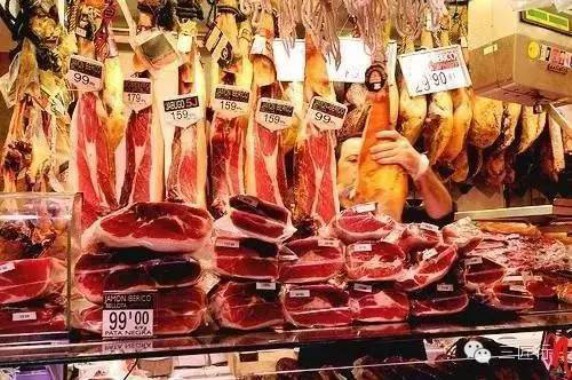
From the table, you can see that top-tier Jamón Ibérico has the highest calories because fat penetrates the muscle fibers, forming beautiful marbling. But importantly, most of its fat is monounsaturated oleic acid—the main component of olive oil—considered “good fat”! Meanwhile, regular Jamón Serrano has relatively less fat and friendlier calorie content.
So what about pan-fried Spanish ham calories? Can you eat it while dieting? Absolutely! The key lies in “how to eat” and “how much.” First, devouring half a plate is definitely not advisable—treat it as a flavor accent rather than a main dish. Eating three to five slices per serving, about 20-30 grams, to satisfy cravings is perfectly fine. Second, pair it with melon, tomatoes, or whole wheat bread to increase satiety and fiber intake. Most importantly, gracefully remove the thick, pure white external fat strip and only eat the red and white meat part to significantly reduce calorie intake!
Spanish ham is not a “calorie monster” on your dieting journey. By choosing the right type, controlling portions, and pairing with healthy ingredients, it can be a wonderful way to enjoy life and supplement quality protein and healthy fats. So don’t avoid it just because of calorie fears! How do you like to eat ham? Share your favorite low-calorie tasty pairings below!
