For those newly arrived in Spain, have you been amazed by a dish called Melón con Jamón? The sweet melon paired with savory ham is simply a perfect summer match! When I first tasted it, I couldn’t stop eating. But honestly, every time I eat it, I wonder: this ham looks rosy and moist, with no sign of cooking—is it really raw meat? Eating it like this, is it truly safe? I’m sure many of you share the same doubt.
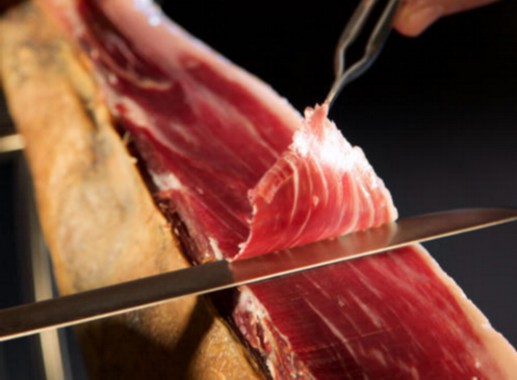
Actually, you can relax! The Spanish ham we eat, especially the high-quality Iberian ham, is not raw pork in the traditional sense. It is a cured meat product that has undergone a long process of drying and curing. This “curing” process gives the ham its unique flavor and makes it safe to eat. It is completely different from fresh pork that must be fully cooked.
How is the ham made exactly?
The production technique for Spanish ham is very elaborate, and it’s the Spanish ham with melon recipe that transforms it from raw meat into a ready-to-eat delicacy. In brief, a top-quality Iberian ham leg goes through several stages:
- Salting: The whole hind leg is fully covered with sea salt to dehydrate and preserve it, a process that usually lasts one to two weeks.
- Washing and resting: Excess salt is washed off, then the ham rests in a cool, humid environment for one to two months to let the salt evenly penetrate inside.
- Drying and curing: This is the key step for Spanish 5J ham with melon! The ham is hung in a ventilated storage room called “Secadero,” where temperature and humidity are controlled to allow it to dry naturally. This process lasts several months to even three or four years. During this time, proteins and fats inside the ham undergo remarkable changes, creating an incomparable rich aroma.
To make it clearer, here is a simple comparison table:
| Feature | Fresh Pork | Spanish Dry-Cured Ham |
|---|
| Processing | None | Salting, drying, curing |
| Moisture Content | High | Very low |
| Shelf Life | Short | Several years |
| How to Eat | Must be thoroughly cooked | Sliced and eaten raw |
So the Spanish ham with melon, is this ham safe to eat? The answer is: Absolutely safe! The curing and drying processes, especially the large amount of salt and loss of moisture, create an environment unsuitable for most bacteria and microbes. This is very similar to the principles behind traditional cured meats like Chinese Jinhua ham—an ancient food preservation wisdom. As long as you buy Spanish ham from reliable sources with quality guarantees, you can enjoy it safely by eating it sliced directly.
Now you can completely relax! Next time you order at a restaurant or see Melón con Jamón at a friend’s place, don’t worry about whether the ham is raw—just close your eyes and savor this unique salty-sweet flavor from the Iberian Peninsula! Have you tried any other unusual Spanish dishes? Feel free to share your experiences and comments below!
