When I first arrived in Spain, my impression of breakfast was still stuck on milk with cereal or croissants. Until one day, at a nondescript street corner Bar, a friend ordered me a Tostada con tomate y jamón, and wow, a whole new world instantly opened! Just a few simple ingredients combined, yet how could it taste so good?! Since then, I’ve been hooked, and it’s become my unshakable breakfast favorite. Today, let me share with you this national Spanish breakfast dish, showing you step by step how to make the most authentic flavor at home!
The full Spanish name of this dish is Pan con tomate y jamón, literally “bread with tomato and ham,” which sounds plain, but the magic lies in the choice of ingredients. You could say the quality of the ingredients directly determines how good this breakfast can be. Don’t be fooled by its simplicity; Spaniards are very particular about these basic ingredients.
The Four Key Elements: Choosing the Right Ingredients is Half the Battle
Bread
Never use that soft, limp sliced toast; the texture is all wrong! It’s best to use European-style bread, especially ones with a crusty exterior and large holes inside, like ciabatta or Spanish rustic bread. The key is that once toasted, it must be crispy and crunchy to hold the tomato juice and olive oil without turning soggy.
Tomato
Not all tomatoes are suitable. For this breakfast, go to the market and buy tomatoes specifically for “spreading,” known as “Tomate de untar” or “Tomate para restregar.” These tomatoes are juicy with thin skin and soft flesh. If you can’t find those, choose fully ripe large tomatoes. The most authentic way is to cut the tomato in half and rub the cut surface directly onto the toasted bread, letting the pulp and juice soak in. The easy version is to grate the tomato and spread the pulp evenly.
Ham
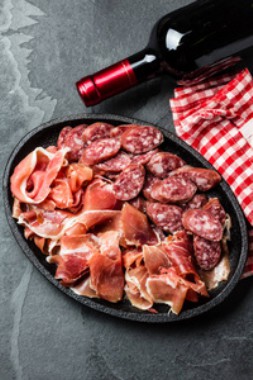
The knowledge around Spanish ham is extensive. Broadly, it is divided into two types: and Jamón Ibérico. For everyday breakfast, a good quality Jamón Serrano slice is delicious and cost-effective. Of course, if you want to treat yourself with [Spanish ham sandwich](https://www.52spain.com/d/29240-talking-about-spains-national-dish-ham-sandwich-bocadillo-de-jamon), choosing a slice of Jamón Ibérico will give you that melt-in-your-mouth fat sensation that can bring pure happiness.
| Ham Type | Pig Breed & Feeding | Flavor Profile | Price |
|---|
| Jamón Serrano | White pig, grain-fed | Slightly salty and savory, leaner meat | Affordable |
| Jamón Ibérico | Iberian black pig, acorn-fed | Rich fat content with nutty aroma, melts in the mouth | Expensive |
Olive Oil
Be sure to use extra virgin olive oil! It is one of the dish’s souls. Good extra virgin olive oil carries a slight spicy kick and fruity aroma, greatly enhancing the overall flavor. Avoid using regular cooking oil or blended olive oil, as the taste is far inferior.
My Preparation Process
- Slice the bread thickly, then toast it in a toaster or skillet until both sides are golden and crispy.
- Take a clove of garlic,
no need to chop, and rub its cut surface thinly on the toasted bread, mainly to impart fragrance. Be careful not to overdo it, or it will become too spicy.
- Evenly spread the prepared tomato pulp over the bread.
- Generously drizzle your extra virgin olive oil to let it soak into the bread’s pores.
- Sprinkle a little salt. If your Spanish ham toast ham is salty enough, you can skip this step.
- Finally, elegantly lay a few slices of Spanish ham on top. Done! Paired with a glass of fresh orange juice or coffee, it’s a perfect Spanish-style breakfast.
This breakfast is also very versatile; some Spanish ham and bread recipes include a bit of cheese or substitute ham with tuna or avocado. Once the foundation is solid, how you customize it is up to your taste. What’s your favorite way to enjoy Tostada in Spain? Any hidden gems or secret recipes? Feel free to share and discuss below!
