Brothers and sisters in the duck homeland, today I did something very down-to-earth—I went to Mercadona and bought a bag of ham-flavored chips. You know, the kind with tempting ham slices printed on the packaging. I thought I had to try this “national treasure” level snack! Full of anticipation, I opened it, ready to welcome the unique salty aroma and acorn flavor of Iberian ham.
But the moment the chips touched my tongue, I was stunned. The taste… how to put it, a sense of familiarity! It wasn’t the pure, slightly salty flavor of Jamón Serrano or Ibérico that I imagined; instead, it had a very obvious smoky flavor with a hint of lingering sweetness. A thought flashed through my mind instantly: how come these Spanish ham chips taste so much like the Xuanwei ham from my hometown?!
Here it is, right below. Everyone, judge for yourselves: the packaging clearly shows Spanish ham, but the taste carries a “Chinese特色” (Chinese local) twist. Isn’t that a bit curious? This made me deeply ponder whether my palate was off or if the chips themselves are some kind of “fusion dish.”
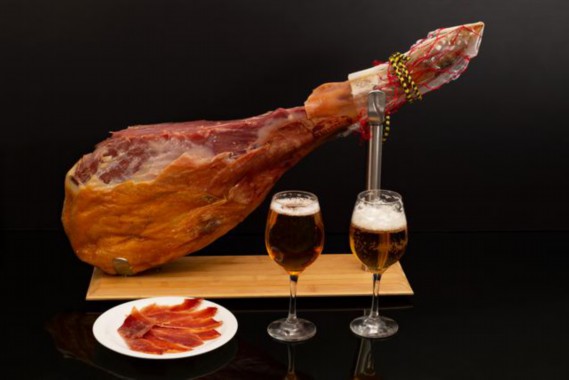
To solve this “century-old mystery,” I looked up some information and made a simple comparison for everyone.
Spanish Ham vs. Xuanwei Ham Flavor Comparison
| Feature | Spanish Iberian Ham | Yunnan Xuanwei Ham |
|---|
| Pig Breed | Iberian black pig | Local breeds like Wujin pig |
| Production Process | Sea salt curing, long-term air drying and aging | Well salt rubbing, fermentation, smoking, air drying |
| Core Flavor | Salty and savory, with nutty aroma, can be eaten raw | Strong savory flavor with unique fermented aroma, requires cooking |
| Representative | Mediterranean diet icon | One of China’s top three famous hams |
Looking at this, the differences are quite significant. Spanish ham emphasizes the pure flavor from air drying and aging, while Xuanwei ham’s flavor is more complex and fully develops only after cooking. So the smoky flavor in these Spanish ham chips smell bad might be an attempt to mimic the ham’s flavor as used in certain cooked dishes, rather than the raw ham itself.
Therefore, about the chip workshop’s Spanish ham, I guess the chip manufacturer probably blended flavor characteristics of various hams for commercial appeal. Could this be seen as an example of “culinary globalization”? Haha. Has anyone else had a similar experience? Or does anyone know a snack that truly delivers the “authentic” taste of Spanish ham? Please share!
