For friends new to Spain, do you feel completely lost like I did when standing in front of the ham section at the supermarket? Seeing rows of hanging hams tied with colorful plastic labels — black, red, green, white… not knowing where to start. Especially the black label and green label, which differ significantly in price. What exactly distinguishes them? Today, let’s talk about this topic, and I guarantee that after reading, you’ll instantly become a half-expert on ham!
Black Label vs Green Label: More Than Just Color
In Spain, Iberian ham is regulated by strict laws and classification levels. These colored labels are essentially their “ID cards.” Today, we focus on the two heavyweight contenders: Black Label and Green Label.
The Prestigious “Black Label” - Jamón de Bellota 100% Ibérico
The Black Label, officially named Jamón de Bellota 100% Ibérico, represents the highest grade in Iberian ham, famously known as “Pata Negra.” To earn the prestigious black label, two extremely stringent conditions must be met simultaneously:
- Purebred pig: Must be 100% pure Iberian black pig.
- Acorn-fed: During the final fattening stage, pigs must roam freely in oak forests feeding on fallen acorns and natural pasture grasses. This method allows fat to infiltrate muscle fibers, creating a beautiful marbled pattern.
Therefore, the flavor of Spanish ham green label Black Label ham is unique, with a complex and layered taste, intense nutty aroma, melt-in-your-mouth fat, and a lingering fragrant finish—truly a top-tier indulgence.
The Cost-Effective Choice “Green Label” - Jamón de Cebo de Campo Ibérico
The Green Label, officially Jamón de Cebo de Campo Ibérico, may not be as Spanish ham green label red label “noble” as the Black Label, but it’s an excellent combination of quality and value. To receive the green label, the ham must meet these requirements:
- Crossbreed pig: Must be at least 50% Iberian lineage.
- Free-range outdoor raising: These pigs also roam the fields with sufficient space, feeding on natural pasture, roots, and plants. However, their main diet consists of quality cereals and legume feed.
The Green Label ham also offers outstanding taste, with firm meat and full flavor. While the nutty aroma may not be as prominent as the Black Label, it is an excellent Spanish green label ham eating everyday or entertaining choice, and importantly, much more budget-friendly!
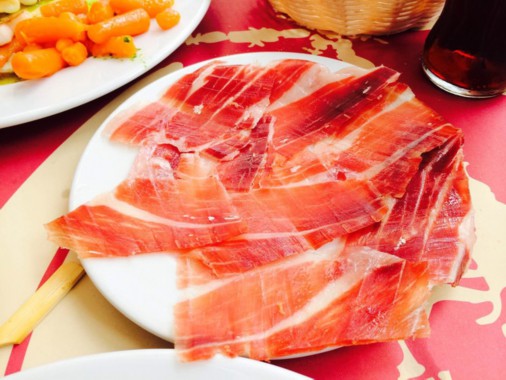
To make things clearer, I’ve prepared a simple comparison table:
| Feature | Black Label | Green Label |
|---|
| Pig Lineage | 100% Pure Iberian | At least 50% Iberian |
| Breeding Method | Free-range, acorn-fed | Free-range, cereal feed + natural pasture |
| Flavor Profile | Intense nutty aroma, complex layers | Rich meaty flavor, great value |
| Recommended Occasion | Special holidays, gifts, premium tasting | Daily enjoyment, family gatherings, entry-level tasting |
In summary, here is my personal advice: If you have no budget constraints or want to give a highly prestigious gift, go for the Black Label without hesitation—it definitely impresses. But if you’re eating it regularly or just starting to explore Iberian ham and want to experience its charm, the green label is definitely a safe and reliable choice in both quality and flavor!
Which label ham do you usually purchase? Feel free to share your favorites in the comments!
