How to Buy Ham and Cheese in Spain? My Favorite Shops and Shopping Tips
For friends new to Spain, eight out of ten will ask me the same question: “Where to buy the best ham and cheese?” That is a big question! Supermarkets are full of choices, markets are fragrant with aroma, and specialty shops hang ham all over the streets—it’s easy to get overwhelmed. Today I’ll share my experience in hopes of helping you cut the detours and head straight to deliciousness!
Don’t underestimate the large chain supermarkets. For everyday cravings, sliced ham and cheese from supermarkets are definitely the best value. Especially Mercadona’s own brand ham, the quality is very consistent. If you want to buy a whole block of cheese, I recommend looking for Queso Manchego marked with the protected designation of origin label. It usually comes in Semicurado and Curado, so you can pick according to your taste. But supermarket ham is mostly machine-sliced, and the flavor always feels a bit less special compared to hand-sliced.
If you want to experience local shopping fun with Spanish ham paired with cheese, be sure to visit local markets. For example, Mercado de Maravillas in Madrid or Mercado de la Boqueria in Barcelona. Here, stalls selling Spanish ham and cheese platters are mostly small family businesses where the owners treasure their products like family heirlooms. Feel free to ask in your “rusty” Spanish: “¿Puedo probar un poco?” Most owners will warmly cut a small piece for you to taste. At these Spanish ham with cheese stands, you can also find olives, pickles, spices—a one-stop shop for Spanish flavors.
The Real Stars: Charcutería
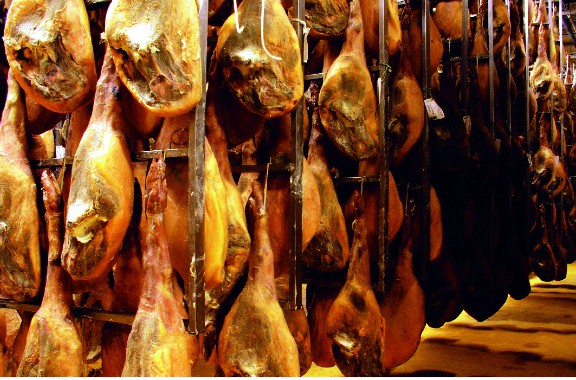
For the most professional and highest quality, you must go to the Charcutería or Jamonería found on street corners. These shops are the soul of Spain’s ham culture. Whole hams of different years and regions hang in the stores, filling the air with a complex aroma of fat and nuts. Here you can witness expert ham cutters slicing by hand with flowing skill. Hand-cut ham is as thin as a cicada’s wing, preserving its oily texture and complex flavor to the fullest. When buying, clearly tell the owner your budget and intended use—they will give the most professional advice. For Iberian ham, you can refer to this simple grading chart by the color of the ham’s hoof label:
| Grade | Breed and Feeding Method | Characteristics |
|---|
| Black | 100% Iberian black pig, acorn-fed free-range | Top quality, limited production, most complex flavor |
| Red | 50%/75% Iberian black pig, acorn-fed free-range | Cost-effective, rich and sweet flavor |
| Green | Iberian black pig, pasture forage + grain feed | Leaner texture, fresh flavor |
| White | Iberian black pig, grain-fed | Entry level, good for cooking actually good to eat directly |
Here’s a little advice: chain stores like “Museo del Jamón” near Madrid’s Puerta del Sol feel more like fast-food places and tourist stops. Locals rarely buy high-quality ham there. I recommend exploring your own neighborhood to find a clean, tidy shop where the owner looks friendly and locals queue up often. Those places usually have surprising quality. The small shop downstairs from me even knows whether I prefer fatty or lean ham! Do you have any secret favorite shops? Or have you ever fallen into pitfalls when buying ham and cheese? Feel free to leave a comment below and share your experience—let’s exchange ideas together!
