When I first arrived in Spain, every time I walked through the supermarket aisles lined with those shiny, glossy ham legs, my mouth would water! I always wondered when I could splurge and bring a whole leg home. Recently, I finally took the plunge but encountered some pitfalls, so I’m sharing my experience with fellow enthusiasts to help you avoid common mistakes.
Understand the Two Main Types: Ibérico vs Serrano
Simply put, these are the two main types of ham made from different pig breeds, explained in this Recommended whole Spanish hams. Serrano ham is made from white pigs, is budget-friendly, and is a staple on Spanish tables with a savory and slightly salty taste. In contrast, Ibérico ham comes from the Ibérico black-hoofed pig, which is free-range in oak forests eating acorns, resulting in richer marbling and more complex aromas. Naturally, it commands a much higher price. For beginners or those on a budget, starting with Serrano is a good choice.
The “ID card” of Ibérico ham: Understanding the color-coded labels
If you’ve decided to buy Ibérico ham from Whole 5J Spanish ham, it’s essential to recognize its four-color label system which directly determines its quality and price. Here is a simple table for clarity:
| Label Color | Spanish Name | Pig Purity & Feeding Method |
|---|
| Black | 100% Ibérico de Bellota | 100% purebred Ibérico pig, acorn-fed |
| Red | Ibérico de Bellota | 50% or 75% Ibérico pig, acorn-fed |
| Green | Cebo de Campo Ibérico | Over 50% Ibérico pig, pasture-fed |
| White | Cebo Ibérico | Over 50% Ibérico pig, farm-fed |
In short: Black > Red > Green > White. If your budget allows, go for black or red labels—the flavor will never disappoint!
Many large supermarkets like Mercadona, Carrefour, and El Corte Inglés sell whole legs of ham and often offer value packs with ham stands and knives during holidays, which is quite cost-effective. However, the range in supermarkets is somewhat limited. For better quality, visiting specialized ham shops is recommended where staff can provide expert advice and even offer tastings. When buying, gently press the ham leg; it should have a slight elasticity but not be too soft.
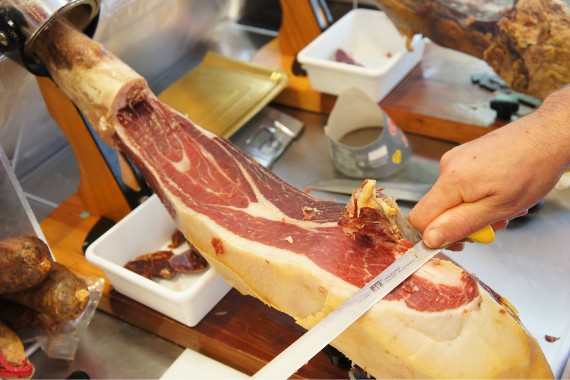
One last reminder: buying a whole ham is a “big project.” First, you need a ham stand and a special long knife, otherwise, it’s impossible to slice properly. Also, once opened, the ham should be consumed quickly; otherwise, the flavor deteriorates and it becomes dry. Our household of two took almost two months to finish a 7-kilo leg, and towards the end, it felt a bit overwhelming, even a little too much. So check the Whole Spanish ham prices, and it’s best to buy when you have a larger family or friends gathering.
Have you ever bought a whole ham? Feel free to share your experiences below or recommend brands you love!
