When I first arrived in Spain, I thought all those legs hanging in the supermarket were pretty much the same. I casually bought a pack of sliced Jamón Serrano and thought it was just okay, a bit salty… Until one time a local gourmet friend took me to a small shop specializing in ham, and I realized how naive I had been! The world of Spanish ham is so much deeper than I imagined!
First, distinguish: Serrano vs. Ibérico
This is the most basic step in the authentic Spanish ham introduction, and many people get confused about it. Simply put, they come from two completely different pigs! Jamón Serrano uses ordinary white pigs, produced in large quantities at affordable prices, and is a common sight on Spanish dining tables. Meanwhile, Jamón Ibérico comes from the precious Iberian black-hoofed pigs, whose fat penetrates muscle tissue creating beautiful marbled patterns, which explains its unique flavor and higher price.
The main event: Iberian ham grades
Once you understand the pig varieties, let’s look at the authentic Spanish ham tapas Ibérico ham’s internal “hierarchy.” Its grades mainly depend on the pig’s farming method and bloodline purity, directly affecting the ham’s flavor and price. Knowing the label colors helps you avoid mistakes:
| Label Color | Grade Name | Farming Method |
|---|
| Black | 100% Ibérico de Bellota | 100% pure Iberian pig, acorn-fed, free-range in oak forests |
| Red | Ibérico de Bellota | At least 50% Iberian bloodline, acorn-fed, free-range |
| Green | Cebo de Campo Ibérico | At least 50% Iberian bloodline, mixed outdoor feeding |
| White | Cebo Ibérico | At least 50% Iberian bloodline, farm-fed with grains |
In short: Black > Red > Green > White. For your first try, starting with green or red labels lets you experience the unique nutty aroma from acorns.
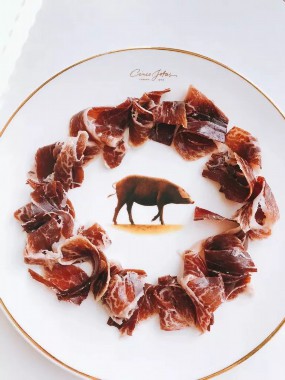
A good slice of Bellota ham should have a bright red color with clean, translucent fat. Never eat it straight from the fridge—you must let it “warm up” to room temperature for 15-20 minutes so the fat softens and the aroma fully releases. That melt-in-your-mouth buttery texture and the endless nutty aftertaste will definitely change your perception of ham. Plus, the authentic Spanish black ham is best sliced fresh; machine-sliced ones always seem to lack a bit of soul.
Finally, let’s talk pairing. The classic way is to eat it directly or with a simple slice of toasted bread. A glass of Tempranillo red wine or a chilled glass of Cava sparkling wine are perfect matches. I used to foolishly pair it with rice; now I realize how much of a waste that was! How do you like to enjoy ham? Do you have any favorite hidden gem ham shops or brands to recommend? Let’s build the conversation in the comments!
