Having just arrived in Spain, I was completely overwhelmed by the dazzling variety of hams in the supermarkets. Seeing whole legs of ham hanging and pre-sliced packages with prices ranging from a few euros to dozens of euros, I honestly didn’t know where to start. Every time I wanted to buy some, I feared making a bad choice and wasting money. I believe many newcomers share the same confusion as I did?
After some research and guidance from local friends, I finally got a better understanding. Simply put, Spanish ham mainly falls into two categories: Jamón Ibérico and Jamón Serrano. The biggest difference lies in the pig breed. Ibérico ham comes from Spain’s unique black-hoofed pigs, while Serrano is made from common white pigs. In terms of flavor and price, Ibérico ham is definitely the king, with richer marbling and a more aromatic, complex taste.
How to Identify High-Quality Ibérico Ham?
There are even more details about Spanish ham flavor, mainly regarding the purity of the pig’s lineage and its feeding method. To make it easy for consumers, the Spanish government uses four color-coded labels to differentiate grades. Just look for these when buying!
| Label Color | Meaning | Taste Characteristics |
|---|
| Black | 100% purebred Iberian black pig, free-range in oak forests | Top-tier! Rich, smooth, melts in the mouth, with nutty notes |
| Red | At least 50% Iberian lineage, free-range in oak forests | Excellent quality, intense aroma, great value for money |
| Green | At least 50% lineage, outdoor raised, fed grains and natural foods | Good taste with a countryside feel, more affordable |
| White | At least 50% lineage, penned, grain-fed | Entry level, mainly salty, suitable for everyday meals |
This picture was taken at a ham shop last time; the master was slicing a high-quality Ibérico ham, look at the snowflake-like marbling!
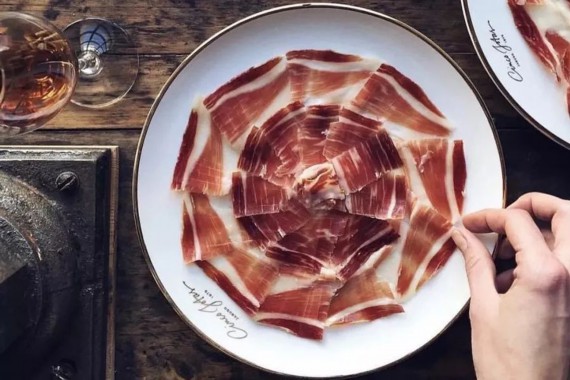
As for Jamón Serrano, it’s more like Spain’s everyday household ham. Though its flavor profile is less complex than Ibérico, it’s tasty, salty, affordable, and perfect for sandwiches, Tapas, or pairing with melon without worrying about the cost. Also, when checking out Spanish ham flavor differences, you might notice the difference between Paleta and Jamón. Simply put: Spanish ham types flavor differences, the back leg (Jamón) has more meat with more even fat distribution, usually higher quality and costlier.
You Get What You Pay For is the truth. If your budget allows and you want to experience the pinnacle of Spanish ham flavor, go straight for the black label or red label Jamón Ibérico de Bellota, you won’t be disappointed! For everyday eating or if you’re just starting out, green label, white label, or Serrano are all good options. After all this, I’d love to hear your opinions—what’s your favorite production region or brand? Do you have any hidden gem shops to recommend?
