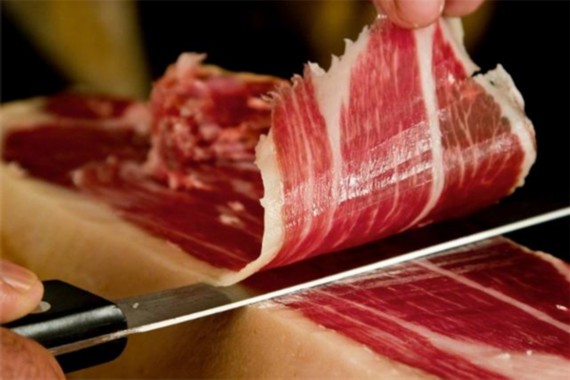
When I first arrived in Spain, what fascinated me the most wasn’t the sunny beaches but the rows of hams hanging in the local markets. Especially when sliced, those paper-thin pieces of meat shimmering with an enchanting sheen had a color strikingly similar to a glass of aged Rioja red wine—deep and layered. At that moment, I wondered where this magical “wine red” actually came from. Could it be that the pigs really “drink” red wine while growing up?
Where Does the “Wine Red” Color of Ham Come From?
Later, I learned that this enticing red shade is actually a perfect blend of food art and science. It mainly originates from myoglobin in the pig’s muscles. During the years-long curing and air-drying process, myoglobin undergoes a series of complex chemical reactions with salt and air, ultimately stabilizing to form this unique, gem-like deep red color. Particularly for the highest-grade Iberian acorn-fed pigs, which roam freely in oak groves, their muscle fibers develop more, and myoglobin content is higher, so the pairing of Spanish ham with red wine also displays the deepest and most beautiful color.
Judging Quality by Color
Color is not just for appearance but is a key quality indicator for ham. From Cebo to Bellota, both color and fat distribution vary greatly. Simply put, the higher the grade, the deeper the meat color, the fat shows a translucent ivory hue, and it infiltrates the muscle fibers evenly in a marbled pattern.
| Ham Grade | Main Characteristics | Color Description |
|---|
| Jamón de Cebo Ibérico | Grain-fed | Pinkish color, thicker fat layer |
| Jamón de Cebo de Campo Ibérico | Grain + free-range | Darker than Cebo, between pink and deep red |
| Jamón de Bellota Ibérico | Acorn + free-range | Deep ruby red, oily and glossy |
| Jamón de Bellota 100% Ibérico | Purebred + acorn + free-range | The deepest, purple-red color, fat perfectly infusing the meat |
When the Ham’s “Color” Meets the Wine’s “Color”
After discussing the ham’s “wine red” color, it’s only natural that Spanish ham paired with red wine brings us to talk about real red wine. Top-grade Jamón Ibérico has a sweet, fatty aroma, melts in your mouth, and leaves a lingering aftertaste. If the red wine paired with Spanish ham is chosen poorly, it’s simply a waste of a treasure. From personal experience, never use overly tannic or overpowering New World red wines as they completely mask the ham’s delicate flavors. The best partners are native Spanish wines. A glass of Tempranillo Crianza or Reserva from Rioja, with just the right acidity to balance the ham’s fattiness, and with soft tannins and fruity aroma matured in oak barrels, perfectly complements the nutty scent of the ham—an ideal match!
Food pairings are highly personal experiences. For example, some people enjoy pairing it with Fino sherry, which reportedly enhances the ham’s savory saltiness. What wines do you usually pair with ham? Do you have any secret perfect pairings? Feel free to leave a comment below to share your “ham and wine” experiences!
