For friends new to Spain, do you find yourself tempted every time you walk past the supermarket or ham shop, seeing those rows of hanging “big legs”? You want to buy one to take home and enjoy the joy of slicing a couple of pieces anytime, anywhere, but worry about spending too much on something that doesn’t meet your expectations? Don’t worry, today I’ll share from my own experience how to choose your first whole leg of ham!
First, Understand the Two Main Types: Ibérico vs Serrano
In Spain, ham mainly falls into two categories: Jamón Ibérico and Jamón Serrano. Simply put, the former is the “noble” type and the latter the “common” one. The key differences lie in the breed of pig, feeding methods, and curing time. For beginners looking for whole leg Spanish ham recommendations, understanding their basic differences is the first step to avoid being misled.
| Feature | Jamón Ibérico | Jamón Serrano |
|---|
| Pig Breed | Iberian Black Hoof Pig | Common white pig |
| Feeding | Acorns, grains, natural pasture | Mainly grain feed |
| Flavor | Rich texture, sweet and oily fat, melts in mouth | Slightly salty, leaner meat |
| Price | Higher | Affordable, suitable for daily consumption |
For first-timers on a budget, buying a high-quality Serrano ham is totally enough and usually costs between 60-90 euros. If you want to go all-in and experience the top tier, then aim for Ibérico!
Next, Read the Labels Like a Local
If you decide to get a Jamón Ibérico, you must learn to check the plastic tag color on the ham’s ankle, as it directly determines the grade and price:
- Black: Top level! 100% purebred Iberian pig, fully acorn-fed. The ultimate choice.
- Red: At least 50% Iberian bloodline, acorn-fed.
- Green: Iberian pigs fed on pasture with grains and natural feed, not purely acorn.
- White: Iberian pigs raised in confinement, fed only grain feed.
So remember the order: Black > Red > Green > White. Also, when selecting, gently press the fat on the ham. If it feels soft and gives way easily, it indicates good fat distribution and maturation. A quality Ibérico usually has a thinner, longer ankle.
Finally, How to Take Care of It at Home?
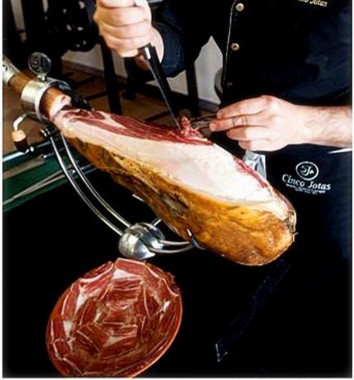
Congratulations on bringing your “big leg” home! Next, you’ll need a ham holder and a set of professional slicing knives. After opening the ham, fix it on the holder and keep it in a cool, ventilated place. Never put it in the fridge! After each slicing session, cover the cut surface with the thick piece of fat you just cut to keep it moist, then cover with cling film or a clean cloth to prevent drying and dust. Although the initial investment is a bit high, the happiness of owning a whole leg of ham is absolutely worth it — no more worrying about living on a shoestring next month eating dirt!
Have you ever bought a whole leg of ham? What pitfalls did you encounter or do you have any unique tips? Feel free to leave a comment below and share experiences together!
