Just came back from a Tapas bar and was once again mesmerized by the ham cutter in the Spanish restaurant. Watching him calmly use a long knife to slice paper-thin pieces from a whole gleaming Iberian ham felt less like food preparation and more like a solemn ritual. In Spain, this profession has a special name, called Cortador de Jamón, truly the soul of the restaurant.
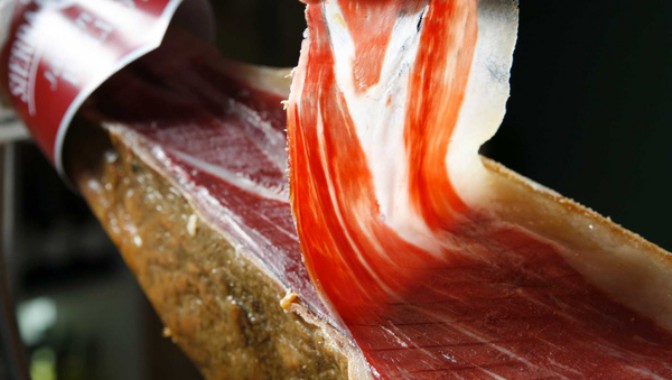
Cutting ham is not as simple as slicing a few times as restaurant Spanish ham calories might imply. Professional ham cutters strive for each slice to have the perfect size, thickness, and balance of lean to fat. Ideally, the slices are thin enough to be translucent, so when eaten, the fat melts quickly on the tongue’s warmth, releasing the richest and most complex aromas. This is not just a technique but a profound understanding and respect for the ingredient.
The Ham Cutter’s “Exquisite Tools”
To slice perfect ham, the tools are crucial. A stable ham stand is the foundation that securely holds the whole ham. Then comes the set of specialized knives: the long, narrow “ham knife” for slicing, and a short, sturdy knife for deboning and trimming. Watching them skillfully use these tools is truly a sight to behold.
Why Hand-Sliced is Better Than Machine-Cut
Many may wonder, as discussed in eating Spanish ham in restaurants makes you fat, why bother with hand slicing when machines exist? The difference is significant! Machine cutting is fast, but the friction generates heat that damages the precious fat structure and flavor of the ham. Hand slicing is done at a constant temperature, preserving the ham’s original, delicate nutty aroma to the fullest extent. It can be said that good Iberian ham must be paired with hand slicing; otherwise, it’s a waste.
| Feature | Hand Slicing | Machine Cutting |
|---|
| Temperature Control | Constant temperature, preserves fat | Friction generates heat, affects flavor |
| Texture | Natural fat melting, rich flavor | Slightly dry, single flavor |
| Presentation | Artistic, irregular beauty | Uniform shape, rigid |
| Price | Higher price | Relatively cheaper |
In Spain, becoming a professional ham cutter requires specialized training and exams. There are even national ham slicing competitions where champions hold prestige comparable to Michelin chefs. This shows the Spaniards’ deep respect for their national treasure. Next time you visit a restaurant, if you go to eat Spanish chorizo and see a cutter slicing ham live, take a moment to observe—it’s truly an enjoyment. Have you ever met a memorable ham cutter in Spain? Let’s chat about it!
