Friends who just arrived in Spain, like me, must be curious why whether in small Tapas Bars, restaurants, or markets, rows of shiny pig legs are hanging everywhere? At first, I thought they were some unique decorations, but later, I realized that the significance of eating Spanish ham at a restaurant is quite profound! This is not just decoration but the essence of Spanish culinary culture.
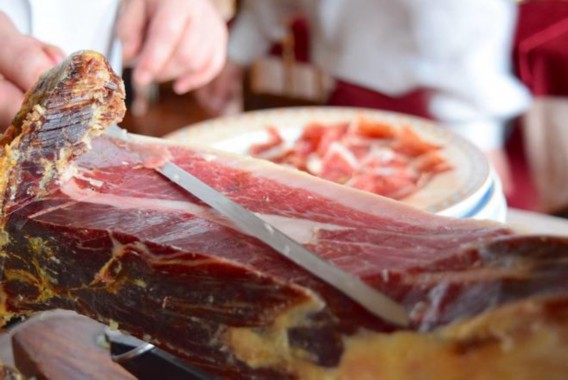
Actually, there are several reasons for hanging hams like this. First, this is part of the traditional drying and curing process of Spanish ham eaten in restaurants causing weight gain. Hanging ensures good ventilation, allowing the ham to slowly dehydrate and ferment in a stable temperature and humidity environment. The fat also evenly penetrates muscle fibers, creating a unique flavor. Secondly, this is the most traditional and correct storage method to prevent moisture buildup that causes mold. Of course, displaying rows of premium Iberian hams is also a form of “showcasing strength”, telling diners: Look how excellent our ham quality is!
How to Differentiate Between Different Hams?
Simply put, Spanish ham is mainly divided into two categories: Serrano and Iberian. The former is made from regular white pig legs, affordable and commonly consumed daily; the latter is made from precious Iberian black-hoof pigs and classified by pedigree purity and feeding method into different grades, considered a luxury product among hams. Their differences are quite significant:
| Feature | Serrano Ham | Iberian Ham |
|---|
| Pig breed | Regular white pig | Iberian black-hoof pig |
| Feeding | Mainly grain feed | Mainly acorns and natural pastures |
| Flavor | Slightly salty, firmer texture | Richly oily and tender, melts in your mouth, nutty aroma |
| Price | Affordable | Expensive |
Ordering Tips
When ordering ham in a restaurant, the menu usually specifies whether it is Serrano or Ibérico. If it’s Ibérico, it will also specify grades like Cebo and Bellota. The Bellota-grade Iberian ham is the highest quality and most expensive, but its taste is absolutely unforgettable! It’s highly recommended to get the ham cortado a cuchillo (hand-cut); although more expensive than machine-cut, the texture and flavor are on a completely different level. I always can’t help but salivate and order an extra portion.
Next time you visit a restaurant, you can confidently choose ham based on your budget and taste! Pair it with a glass of Rioja red wine or simply Pan con tomate—it’s simply divine. Which type do you prefer? Or do you have any recommended ham brands or small eateries? Feel free to share in the comments below!
