As a newcomer to Spain, I used to stand in front of the ham section in supermarkets and feel bewildered. Black label, red label, green label, white label… it all looked dizzying, and the prices varied wildly. The black label is too expensive, a bit of a luxury for everyday eating, so I was always curious: how’s the cheapest white label Iberian ham? Is it a rip-off or a gem? I recently did some research and want to share my findings with you.
What Exactly Is White Label Ham?
Simply put, the Spanish government regulates the market with four color-coded labels that distinguish Iberian ham grades. These color labels mainly depend on two core factors: the pig’s breed purity and its feeding method.
The white label represents “Cebo Ibérico”. This means the ham comes from pigs that are at least 50% Iberian breed, but they are farm-raised in enclosures, mainly fed on cereals and legumes. They do not enjoy the “happy childhood” of roaming oak forests and eating acorns. Therefore, the flavor of Spanish ham white label recommendation differs noticeably from the acorn-fed varieties.
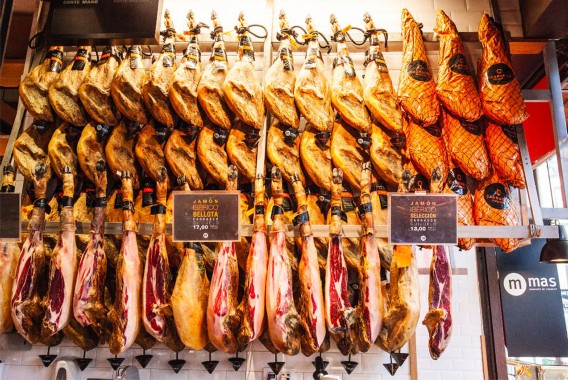
Quick Distinction of the Four Labels
To help you understand more intuitively, I made a simple table for quick reference:
| Label Color | Spanish Term | Breed Purity | Feeding Method |
|---|
| White | Cebo Ibérico | ≥50% Iberian | Cereal feed |
| Green | Cebo de Campo Ibérico | ≥50% Iberian | Cereal feed + free range |
| Red | Bellota Ibérico | 50% or 75% Iberian | Acorn + free range |
| Black | 100% Ibérico de Bellota | 100% Iberian | Acorn + free range |
From this table, you can see that the white label is the entry-level in Iberian ham. Although entry-level, it is still “Iberian ham,” completely different from the cheaper Serrano ham!
So, is it worth buying? My answer is: Absolutely worth it! For everyday consumption, white label ham offers excellent value for money. Its price may be only one-third or even less than that of black label ham, as noted in 5J Spanish ham white label, but you can still enjoy the unique oily aroma and flavor characteristic of Iberian pigs. Whether for Tapas, paired with melon, or tucked into a sandwich, it is more than sufficient. Of course, for very important guests or special occasions, you might want the black label. But for “daily staple” ham among white label, red label, black label Spanish ham, the white label is definitely one of the best choices when your budget is limited. It may not match the black label, but your wallet will thank you.
I wonder what brands of white label ham you usually buy? I usually just pick randomly at Mercadona or Carrefour, and the quality seems quite consistent. Feel free to leave comments below to share some brands you think are good!
