For those brothers and sisters newly arrived in Spain, do you feel tempted but a bit confused every time you see that spectacular row of hams when shopping? Black label, red label, white label… front leg, hind leg… which one to choose? Today, sharing from experience, let’s talk about the most suitable entry-level option for us newbies—the white label hind leg.
What is “White Label” Ham?
Simply put, within the category of Jamón Serrano, “white label” refers to the entry-level, everyday option. It means the ham is made from white pigs mainly fed on grain-based feed and cured by air-drying for at least 7-12 months. Although it doesn’t match the luxury of the expensive Iberian black pig ham, it offers a savory flavor with a chewy texture and is very affordable, making it an excellent starting point to experience Spanish ham culture.
Why Choose the “Hind Leg” Instead of the “Front Leg”?
In supermarkets, you’ll find two sizes of whole legs: the larger called Jamón, and the smaller called Paleta or Paletilla. For first-time buyers of whole legs recommended by Spanish ham white label, I strongly recommend buying the hind leg! The reasons are simple:
- More meat, fewer bones: The hind leg is larger with a higher proportion of meat, yielding about 50% edible meat. The front leg has more bones and less meat, so slicing it yourself might feel like a loss.
- Easier to slice: The bone structure of the hind leg is relatively simple, with flat meat blocks, making it much easier for beginners to handle. The shoulder bones in the front leg are complex and require advanced knife skills.
To clarify, here is a simple comparison table:
| Feature | Hind Leg | Front Leg |
|---|
| Weight | Usually 7-9 kg | Usually 4-6 kg |
| Taste | Moderately salty and savory, leaner meat | Richer in fat, stronger flavor |
| Slicing Difficulty | Lower, beginner-friendly | Higher, more bones |
| Cost-effectiveness | Slightly higher unit price but higher yield | Lower unit price but lower yield |
Tips for Buying and Eating
When buying, mainly check that the vacuum packaging is intact with no leaks. At home, you’ll need two must-have items: a ham stand and a long, slender ham knife. You can find these at any large supermarket or on Amazon. Once opened, place the ham on the stand and store it at room temperature in a cool, ventilated place—do not refrigerate it! After each slicing session, cover the cut surface with the first thick fat slice you cut off to prevent drying and oxidation. Like this:
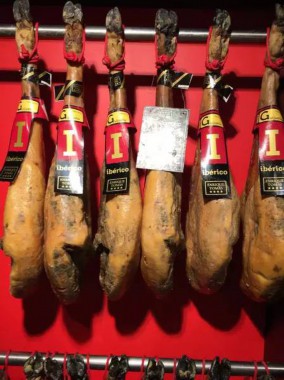
If 5J Spanish ham white label is your goal—to freely slice a few pieces anytime to accompany drinks or melon at home—then starting with the highly cost-effective white, red, and black label Spanish hams, especially a white label hind leg, is definitely a solid choice. My first ham was bought at Mercadona, and it truly opened a new world for me!
