Hello forum veterans! A few days ago I couldn’t resist and finally brought home a whole Spanish ham I had been dreaming of. Just having it at home brings so much happiness! But then came the problem, this big piece—where to start? After researching for several days, I finally managed to carve out some decent slices. Today, I’ll share my initial experience with “opening” the ham and the tips I gathered, hoping to help fellow beginners like me.
Preparation: Sharpening Before Cutting the “Leg”
First, having a good set of tools is essential. You need at least three things: a sturdy ham stand, a long, thin ham knife, Spanish ham front and hind legs, and a short, wide knife for trimming and peeling. Before slicing, it’s best to sharpen the knife a few times with a honing rod, as a sharp blade allows you to cut wafer-thin slices. Remember, safety first; wear a cut-resistant glove on the hand not holding the knife.
Step One: Securing and Cleaning the Ham
Place the ham hoof facing upward, securing it in the ham stand. We usually start with the fattier hind section. The first cut is a V-shaped incision a few centimeters below the hoof, making a deep circular cut that makes peeling easier. Then remove the yellow, rancid-smelling outer fat and hard skin, peeling only as much as you slice; don’t strip it all at once. Don’t throw away the white fat slices you cut off—they’ll be very useful later!
Key Technique: Parallel and Slow Slicing
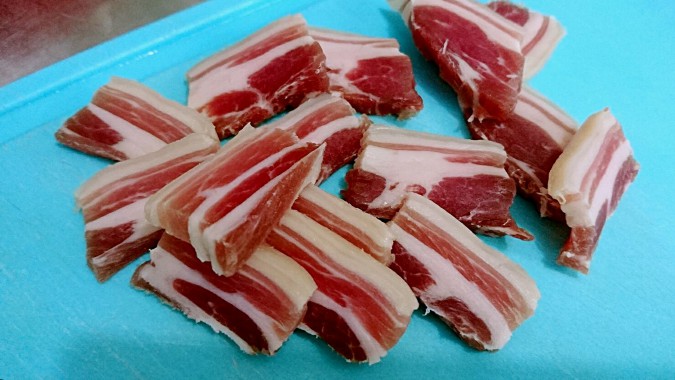
Now you can start slicing! Keep the knife blade parallel to the ham’s surface, using the full length of the blade, gently pulling it back and forth, not pressing down with force. The goal is to slice translucent wafers with the perfect amount of marbled fat. Different parts have different flavors and textures, so choose according to your preference.
Characteristics and Recommendations by Part
| Part | Features | Eating Suggestions |
|---|
| Maza | Most meat, richest marbling | Eat first; tender and fatty texture |
| Contramaza | Leaner, strong fibers, see Spanish ham hind leg slicing | Rich flavor, chewier bite |
| Babilla | Mainly lean meat, low moisture | Recommended to eat early to avoid dryness |
| Punta | Salty, aromatic fat | Rich texture layers, ideal with light drinks |
How to Store Leftover Ham
After slicing, the most crucial step is here! Place the white fat slices you saved earlier over the exposed cut surface to prevent oxidation and drying. Then cover it with a clean cotton cloth or kitchen towel, allowing breathability. Store it in a cool, ventilated place at home. Avoid wrapping in plastic wrap, and don’t refrigerate the whole Spanish ham hind leg either, as it will greatly affect its flavor and texture.
That’s my personal, humble experience to get the conversation started. I welcome all ham aficionados to share their tips! Which region’s ham do you usually prefer? Let’s chat!
