For newcomers to Spain, are you like me, getting tempted every time you walk past a supermarket or butcher shop by those rows of shiny whole hams hanging there? They look impressive! But when you glance at the prices, ranging from tens to hundreds of euros, it’s easy to get overwhelmed. So, what price range is normal for these? Today, let’s talk about the price issues of this “Spanish national treasure” and provide some tips for beginners to avoid mistakes.
The Two Major Types of Ham: Serrano vs Iberian
First, you need to know that Spanish ham mainly falls into two categories. The more affordable one is Serrano ham. It comes from white pigs, cured and air-dried for a relatively shorter time, usually between 12 and 18 months. In ordinary supermarkets, a whole Serrano ham weighing about 7 kilograms typically costs around 60 to 150 euros. This is the common choice for most Spanish households for daily consumption. It offers great value and is delicious whether eaten directly or cooked with.
The other famous type is the Iberian ham. This is made from Spain’s unique black-hoofed pigs, cured for longer periods, typically 24 to 48 months. Its fat infiltrates the muscle tissue, creating a marbled texture that gives it a flavor and aroma far superior to Serrano. Naturally, the price jumps significantly, with whole legs starting at 200 euros and no upper limit. Prices of 400 to 500 euros are common, and top-quality ones can reach over a thousand euros. You truly get what you pay for.
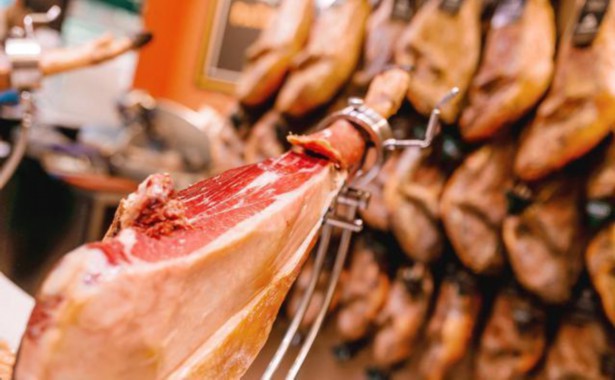
The “Four Colors” Grading of Iberian Ham
The wide price variations of Spanish whole ham prices mainly stem from its strict grading system, distinguished by whole Spanish ham preservation color-coded labels. Recognizing these colors when buying will help ensure you get the right quality:
| Label Color | Official Name | Pig Breed & Rearing | Taste Profile & Price Reference |
|---|
| Black | 100% Ibérico de Bellota | 100% purebred Iberian black pigs, free-range in oak forests | Top tier, rich and smooth, melts in your mouth. Usually priced between €500 - €1000+ |
| Red | Ibérico de Bellota | 50% or 75% Iberian black pigs, free-range in oak forests | Excellent quality with strong nutty flavor. Around €400 - €700 |
| Green | Ibérico de Cebo de Campo | Over 50% Iberian black pigs, pasture-raised with supplemental grains | Good flavor, great value. Around €250 - €400 |
| White | Ibérico de Cebo | Over 50% Iberian black pigs, barn-raised with grain feed | Entry-level Iberian ham. Around €200 - €300 |
Beginner Buying Tips
- Where to buy? Ordinary supermarkets have many Serrano and entry-level Ibérico options. For higher quality, it’s advisable to visit upscale supermarkets like El Corte Inglés or specialized ham shops, which offer a wider selection and tasting opportunities.
- Don’t forget accessories! Buying a whole leg requires a ham stand and a special long knife. Sometimes stores offer package deals including the stand and knife—worth keeping an eye out for.
- Calculate the unit price: Along with the total price, remember to check the price per kilogram. This helps you compare which brand and size offer better value.
Don’t be fooled by a low total price; smaller legs can cost more per kilo.
Buying ham depends on your budget. For casual daily tasting, a Serrano around 100 euros is great. If you’re buying whole Spanish ham prices as a gift or seek ultimate flavor, invest in Iberian ham, especially the black and red labels! What price range do you usually choose? Any buying tips or lucky finds? Feel free to share your thoughts below!
