Just Arrived in Spain? Looking for Brands When Buying Ham? Actually, You’re Looking in the Wrong Place
When I first came to Spain, like many friends, I entered supermarkets or ham shops and felt completely confused facing rows upon rows of large hams hanging from the ceiling. I always thought, such a famous specialty must have well-known brands like “Jinhua Ham” or “Shuanghui” back home, right? But when I asked the store staff, they looked just as puzzled and explained for a while, but I still didn’t quite understand. After staying longer, I finally realized that in Spain, the “brand” concept we understand isn’t so Spanish ham brand quality important in the world of ham.
To understand Spanish ham, you have to think of it like wine. When we buy wine, we care more about its region, grape variety, and vintage than just the winery’s brand. The same principle applies to ham. What determines the quality of a ham is primarily its “origin”—the pig breed and region, followed by its “diet” and “environment,” and finally the craftsmanship and aging process. That’s why you rarely hear Spaniards say, “I like XX brand ham”; instead, they say, “I like Bellota ham from the Guijuelo region.”
Understanding the “ID Card” of Iberian Ham
For the highest-grade Iberian ham, Spain has very strict legal regulations using four color-coded labels to distinguish quality levels, hung on the pig’s hoof for clear identification. Next time you buy ham, don’t just look at the price, first look for this color label:
| Color Label | Meaning | Pig’s Bloodline and Rearing Method |
|---|
| Black | 100% Iberian Acorn Ham | 100% purebred Iberian black pig, raised in oak pastures eating only acorns and natural foods. |
| Red | Iberian Acorn Ham | At least 50% Iberian pig, raised in oak pastures eating acorns and natural foods. |
| Green | Pasture-raised Iberian Ham | At least 50% Iberian pig, reared outdoors fed on grass and grain feed. |
| White | Grain-fed Iberian Ham | At least 50% Iberian pig, raised in farms fed on grain. |
Beyond the prized Iberian ham, Spaniards commonly eat Spanish ham brands Serrano ham. It comes from white pigs and the manufacturing requirements are less complex than Iberian ham, making it more affordable. While Serrano ham doesn’t have a color label system, it is categorized by curing time into Bodega, Reserva, and Gran Reserva—the longer the aging, the richer the flavor.
So when it comes to Spanish ham brand selection, next time you buy ham, don’t get stuck trying to find a famous “commercial brand.” Your focus should be on: region + classification + curing time. Of course, each region and producer has subtle flavor differences, so it’s worth tasting multiple options to discover your favorites.
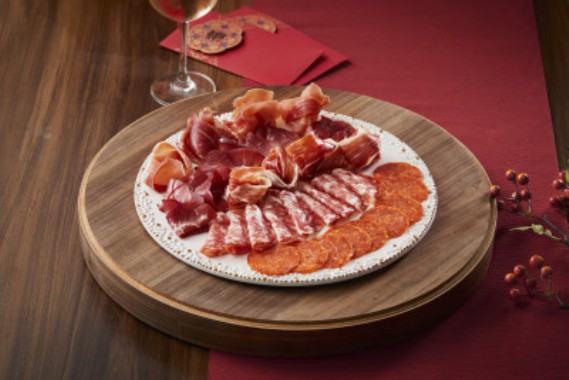
As shown above, looking at the small label on the hoof is the right approach! Everyone, share which region and classification of ham you like best? Do you have any hidden gem producers to recommend?
