Friends who just arrived in Spain, do you feel overwhelmed every time you stand in front of the ham section at the supermarket? Rows of hams hang there with all kinds of colored labels tied to the legs, like Jamón Ibérico and Jamón Serrano, and the prices vary widely, leaving you completely clueless about where to start. I was the same when I first came—I made plenty of mistakes. Today, I’ll help you understand this Spanish national treasure—the labeling of ham.
First, you need to know that Spanish ham is mainly divided into two categories: Jamón Ibérico and Jamón Serrano. The former is made from the prized Iberian black-hoofed pig, while the latter comes from the common white pig. Those colored labels usually refer to the high-end Iberian hams.
The Four-Color Label System of Iberian Ham
The Spanish government has implemented strict color label regulations for Iberian ham to regulate the market. This system evaluates mainly two criteria: pig’s lineage purity and feeding method. Once you understand these four colors, you’ve basically got the basics down.
Black Label
This is the highest grade according to the standards of Spanish ham classification, known as the “king” of hams. It must meet two very strict conditions: 100% purebred Iberian black-hoofed pigs, and they must have been fed entirely on acorns in the oak groves. This type of ham is rare, has the most complex flavor, the most beautiful marbling, and naturally, the highest price. Look for this top-tier Pata Negra product!
Red Label
Second tier. The pig lineage is 50% or 75% Iberian, but the feeding method is the same as the black label—acorn-fed in the oak groves. Although the lineage is not pure, the acorn diet still provides outstanding flavor, making it a very cost-effective choice.
Green Label
Third tier. The pig lineage can be 100%, 75%, or 50% Iberian, but it is not acorn-fed. These pigs are raised free-range outdoors, eating pasture and supplied feed. Due to their large activity space, the meat quality is also good, as explained in several ways to enjoy Spanish ham.
White Label
This is the entry-level Iberian ham. The pig lineage is the same as the green label—100%, 75%, or 50% Iberian—but these pigs are raised in farms and fed entirely on supplied feed. This is the most affordable option, suitable for everyday consumption.
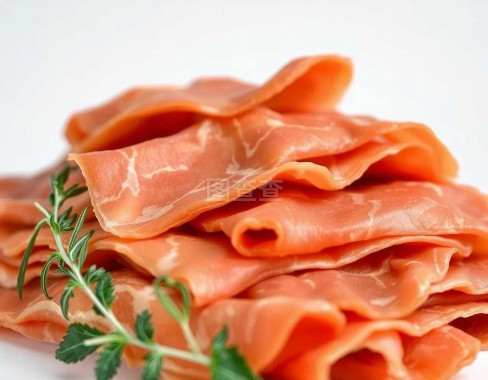
To help you remember, here is a simple table:
| Label Color | Lineage Purity | Feeding Method | Common Name |
|---|
| Black | 100% | Acorns | 100% Acorn-Fed Iberian Ham |
| Red | 50% or 75% | Acorns | Acorn-Fed Iberian Ham |
| Green | 100%, 75%, or 50% | Pasture and Feed | Free-Range Iberian Ham |
| White | 100%, 75%, or 50% | Feed | Grain-Fed Iberian Ham |
As for Jamón Serrano, it does not have such a complicated color system. It is mainly classified by curing time into Bodega, Reserva, and Gran Reserva grades—with longer curing times indicating higher grades. Its flavor is completely different from Iberian ham: saltier and more straightforward, with much lower prices. It is suitable for cooking or making sandwiches.
I hope this little guide helps everyone! Next time you go to the supermarket to buy ham, you won’t be confused anymore. Which type do you usually buy? Feel free to leave your comments below! Anyway, I can only afford the white label…
