Having just arrived in Madrid, it feels like aside from Spanish ham in Madrid and the ancient architecture, everything else around me is ham! In supermarkets, markets, and small taverns, rows of glossy pig legs hang everywhere—especially at the place called “Museo del Jamón,” which can be overwhelming for those with too many choices. After some time paying my dues and getting tips from local friends, today I want to talk about Spain’s national treasure—Jamón—and hope to help newcomers like me!
Ham Basics: Iberian vs Serrano
First, you need to understand that Spanish ham mainly divides into two categories: Iberian ham and Serrano ham. Simply put, one is the “noble” type, and the other is the “common” type. The difference lies mainly in the pig breed and its feeding method, resulting in huge variations in taste and price. I made a simple table for easy reference:
| Feature | Iberian Ham | Serrano Ham |
|---|
| Pig Breed | Iberian black-hoofed pig | Common white pig breeds |
| Feeding | Free-range in oak forests, eating acorns | Mainly grain-fed |
| Texture | Rich and oily, complex aroma, melts in your mouth | Slightly salty, drier texture, chewy |
| Price | Higher price, especially 100% purebred | Affordable, everyday choice |
How to Distinguish Iberian Ham Grades?
If you decide to indulge in Iberian ham, you’ll need to learn how to check the plastic labels hanging on the leg. These indicate the pig’s pedigree and feeding standards. From highest to lowest:
- Black Label: Top-tier! 100% pure Iberian black pig, fully free-range in the oak forest.
- Red Label: At least 50% Iberian bloodline, free-range in oak forests.
- Green Label: Iberian pig fed mainly on compound feed at the farm, with some acorns.
- White Label: Iberian pig fed on grains in captivity; entry-level Iberian ham.
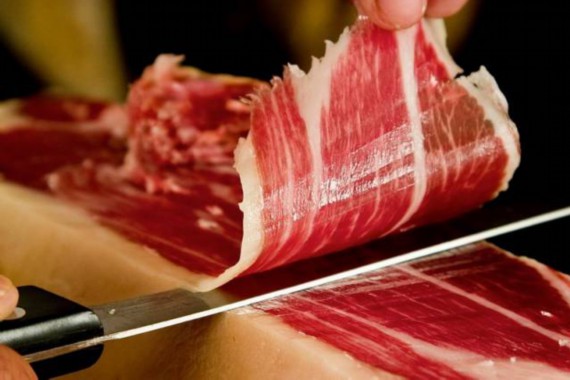
In Madrid, eating ham is very convenient. The chain “Museo del Jamón,” despite its grand name, is actually a cost-effective fast-food style tavern where you can get a ham sandwich with beer for a few euros—a great way to experience the atmosphere. If you want to buy Spanish ham in Madrid with better quality, it’s recommended to visit local markets or specialized butcher shops where the masters will cut it fresh for you. The taste is definitely not comparable to supermarket vacuum packs. Also, the basement supermarket of El Corte Inglés is a good option, offering a wide range of brands.
Finally, a personal tip: unless you have a big family and confidence to finish it quickly, it is not advisable to impulsively buy a whole leg of ham. Cutting it yourself requires skill, and improper storage can easily dry it out or spoil the flavor. For regular tasters like us, buying freshly sliced or small packages is enough. I hope this guide helps! Feel free to add your recommendations below and share your hidden gem ham shops in Madrid!
