Having been in Madrid for only a few months, the thing that quickly conquered my “Chinese palate” wasn’t paella or tapas, but the Spanish ham hanging in countless bars and markets, emitting an irresistible aroma! At first, I thought all ham tasted the same, but I was completely wrong; there is a deep world behind it. Today, from a beginner’s perspective, I want to share some pitfalls I encountered and the insights I’ve gained. Experienced folks, please feel free to correct me!
Types of Ham – More Than Just Salty Meat
You should know that Spanish ham mainly falls into two categories: Jamón Serrano and Jamón Ibérico. The first is made from regular white pigs, affordable and great for everyday eating; the second is crafted from the rare Iberian black-hoofed pig, known as the “Rolls-Royce” of hams. You can initially tell by the color of the hooves: black hooves indicate Ibérico, white hooves indicate Serrano. I made a simple table for clarity:
| Feature | Jamón Serrano | Jamón Ibérico |
|---|
| Pig breed | Regular white pig | Iberian black-hoofed pig |
| Feeding | Grain feed | Grain or acorns |
| Flavor | Salty and straightforward, firmer texture | Rich, oily, complex aroma, melts in your mouth |
| Price | Affordable | Expensive |
What Is the “Black Label” on Jamón Ibérico?
If you decide to indulge in Jamón Ibérico, you’ll notice different colored labels hanging on the ham legs. These are not just decorations but symbols of quality! Simply put, the highest grade is the Black Label, which means the pig is 100% purebred Iberian and spent its last months feeding on acorns in the oak forests, hence the legendary “acorn-fed ham” Jamón Ibérico de Bellota. Then there are red, green, and white labels, with grades and prices decreasing accordingly. For beginners, chasing the black label isn’t necessary since the green label offers excellent value.
Where to buy in Madrid? There are plenty of options. If you’re in a hurry and want convenience, supermarkets like Mercadona or Carrefour offer pre-sliced boxes and whole legs. But if you want a more authentic experience of Spanish ham Madrid, I highly recommend visiting dedicated ham shops or places like the Mercado de San Miguel. At ham shops, you can have professional slicers cut thin, translucent slices for you, which is a pleasure in itself. Moreover, buying Spanish ham in Madrid lets you taste before you buy, so you’ll never make a wrong purchase!
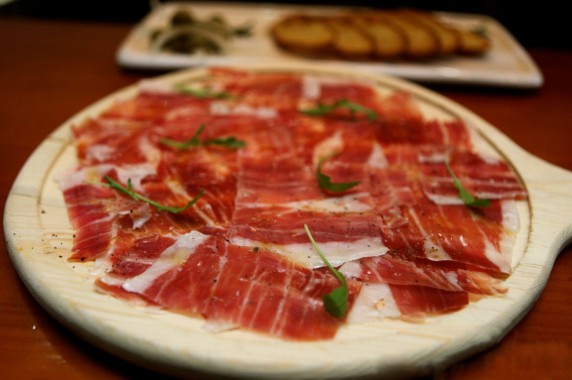
Finally, how to eat it? Actually, the best way is just to eat it directly! Let the fat gently melt at room temperature and release the purest aroma in your mouth. Of course, you can pair it with a small piece of bread, a slice of melon, or pour a glass of Rioja red wine — the taste is simply amazing. Enough said, I’m off to cut myself two slices to satisfy my craving! Do you have any recommended ham brands or hidden gem shops? Let’s chat in the comments!
