If you’re new to Spain, maybe like me, the first time you step into a Tapas bar or restaurant and see that long list of Jamón options on the menu, you feel overwhelmed. Terms like Ibérico, Serrano, Bellota, Cebo… each word seems familiar, but put together you have no idea which one to choose. After some trial and error, and learning from experience, I’ve finally figured out a bit of insider knowledge. Today, I’m sharing how to order a perfect ham plate in a restaurant!
Understand the Two Basic Types: Ibérico vs. Serrano
Simply put, these come from two different pig breeds and form the basic classification of Spanish ham. You can think of them like the difference between “noble” and “common.”
Jamón Ibérico: Comes from Spain’s unique black-hoofed pig breed. The pigs’ lineage and feeding methods are strictly regulated, resulting in a limited supply and higher prices. Its fat infiltrates the muscle fibers creating a beautiful marbled texture, offering a richer, more complex flavor that melts in your mouth.
Jamón Serrano: Comes from ordinary white pigs and is the most common and popular ham in Spain. It’s affordable, leaner and saltier in taste, with a straightforward flavor. It’s perfect for everyday pairing with wine or making sandwiches.
What Do the “Four-Color Labels” on Iberian Ham Mean?
If you decide to indulge and order Ibérico via the Spanish Ham Platter, you need to learn to read its “ID card”—the colored tag hanging on the ham leg. This official Spanish classification has four grades from highest to lowest, directly indicating the quality and price.
| Tag Color | Spanish Name | Pig Breed Purity | Feeding Method |
|---|
| Black | 100% Ibérico de Bellota | 100% pure Iberian black pig | Acorns and natural pasture |
| Red | Ibérico de Bellota | 50% or 75% Iberian black pig | Acorns and natural pasture |
| Green | Cebo de Campo Ibérico | Over 50% Iberian black pig | Free-range pasture, grain and natural food |
| White | Cebo Ibérico | Over 50% Iberian black pig | Farm-raised, grain feed only |
In short: Look for the black tag and red tag—these represent the top-tier acorn-fed hams!
Practical Tips for Ordering in Restaurants
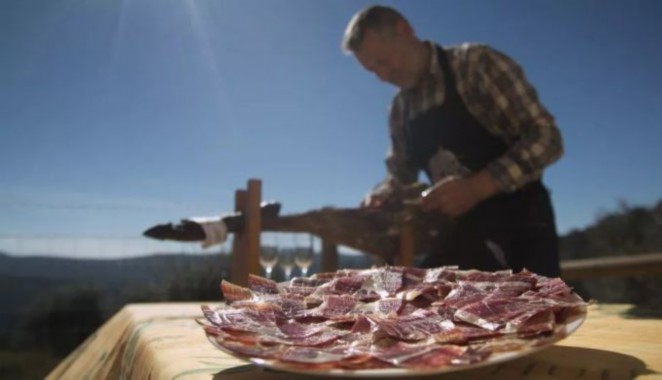
In restaurants, ham is usually served in Ración or Tabla form. A Ración de Jamón Ibérico de Bellota typically costs between 20 and 35 euros, while Serrano is much cheaper, around 8 to 15 euros. If you want to just try a bit, you can ask the waiter if they have a Media Ración. Ordering a plate of ham paired with some Queso Manchego and a glass of red wine is the most authentic Spanish experience.
One last advice: don’t fall for cheap street stalls in tourist areas claiming to sell “top-quality Iberian ham” for 10 euros a portion—that’s usually a rip-off. When it comes to ham, you truly get what you pay for. I hope this quick guide helps you, and I invite seasoned locals to share their hidden gem ham restaurants in the comments!
