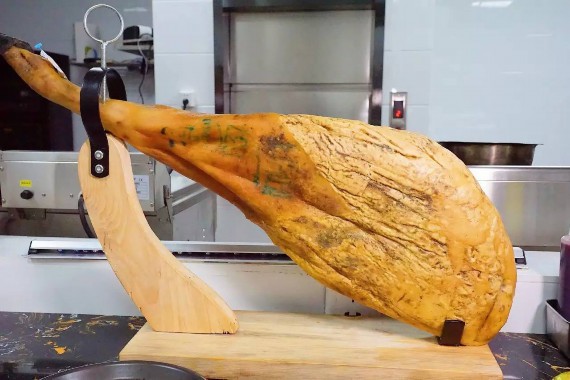
Living in Spain, who can resist the temptation of Jamón! Whether paired with melon, sandwiched in bread, or eaten plain, it’s a gastronomic delight. However, several friends around me, especially from older generations, avoid ham due to high uric acid or a history of gout. Seeing their struggle at gatherings made me curious: what exactly is the purine content of this Spanish treasure? Let’s explore this together.
First, what exactly is purine?
Simply put, purine is a substance present in our bodies and many foods. When metabolized, it turns into uric acid. Normally, uric acid is expelled through the kidneys. But if too much purine is consumed or metabolism is impaired, uric acid accumulates, forming crystals that settle in joints, causing… “Ah!” a gout attack. Therefore, controlling intake of high-purine foods is crucial for preventing gout.
The big reveal: Purine content in Spanish ham
So what about the Jamón we care about most? I looked up some information: pork itself is a medium-purine food. Spanish ham, cured and dried, has reduced water content, making the purine concentration per 100 grams relatively higher. Generally, Spanish ham contains about 130 mg of purine per 100 grams, classified as a medium-high purine food. This number isn’t the highest, but it definitely can’t be ignored.
A visual comparison: Ham vs other common foods
Numbers alone might not give a full picture, so I made a simple table for a direct comparison:
| Food Category | Common Examples | Purine Content per 100g |
|---|
| Very high purine foods | Animal organs, sardines, anchovies, rich meat broth | Best to avoid |
| Medium-high purine foods | Spanish ham, pork, beef, lamb, most seafood | Consume in moderation |
| Medium-low purine foods | Soy products, spinach, mushrooms, asparagus | Can eat in moderation |
| Low purine foods | Rice, noodles, milk, eggs, most fruits and vegetables | Generally safe |
From the table, ham is roughly on the same level as red meats regularly consumed. It is safer than seafood and organs but contains more purine than vegetables and fruits.
So, can friends with Spanish ham purine levels and gout or high uric acid eat it?
The key is two words: Moderation!
For those whose Spanish ham purine content leads to already elevated uric acid, or during an acute gout attack, it’s definitely best to avoid eating it hold back for now. But if you are in remission or just slightly elevated, occasionally indulging is totally fine.
What does “moderation” mean here? About two or three slices per serving just to taste, definitely not the whole plate at once. Also, when eating ham, it’s best not to pair it with beer or seafood, which are also “purine bombs,” as that’s like adding fuel to the fire. Drinking plenty of water and eating more fruits and vegetables to help uric acid excretion is the key.
Spanish ham is delicious but not a “forbidden” food. By understanding its purine level and keeping intake and frequency in check, even people with high uric acid can safely enjoy this gift from the Iberian Peninsula. Most importantly, always follow your doctor’s professional advice!
Do you usually control your ham portion? Or do you have any healthy ways to enjoy ham you’d like to share?
