Last week I finally splurged and brought home a whole Jamón Ibérico, and the whole family was super excited! But then the question came up: how do you slice such a big piece of meat? I searched a lot online and also asked some local friends. After some practice, I finally figured out a few tips. Today, I want to share my first experience “unlegging” the ham, hoping it will help fellow beginners avoid mistakes and waste this earthly delicacy!
Preparation: Sharpening Is Key
To slice the ham properly, having a set of handy tools is essential. Don’t think you can get by with your kitchen knives at home—that’s a disaster waiting to happen. I compiled the essential items into a table for you to check out:
| Tool Name | Chinese | Main Use Description |
|---|
| Jamonero | 火腿架 | Firmly holds the entire ham, ensuring safety and stability while slicing. |
| Cuchillo Jamonero | 火腿刀 | Long, flexible knife used to cut wafer-thin slices of ham. |
| Puntilla | 短刃刀 | Short blade knife for trimming meat around the bone and initial cutting and cleaning. |
| Chaira | 磨刀棒 | Sharpening rod to keep the blade sharp during cutting. |
These tools are available at hardware stores or the kitchenware section of large supermarkets in Spain, and it’s definitely worth investing in a set.
The First Cut and Slicing Techniques
Place the ham with the hoof facing up, securing it on the ham stand. Start slicing from the larger, meatier rear leg part. The first step is “cleaning”: use the short blade knife to cut away the outer yellowish, bitter-tasting fat to expose the quality white fat underneath. Note: Never remove all the fat at once because this fat can be used to cover the exposed surface to prevent the ham from drying out.
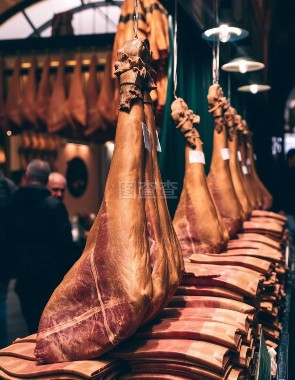
After cleaning a small area, switch to the long ham knife. Keep the blade horizontal and use a “sawing” motion gently to slice the ham instead of chopping straight down. The ideal slice should be translucent, about 4 to 6 centimeters long, and have strands of beautiful white fat—this is where the flavor and texture shine. Remember, this requires patience; enjoy the process!
Storage and Enjoyment
Remember, ham tastes best freshly sliced. After each slicing session, cover the cut surface with the large piece of white fat you trimmed earlier, like putting a “natural lid” on it, then cover it with a clean cloth or kitchen paper. Never use cling film directly on the cut surface as this prevents the ham from “breathing” and may cause off flavors. When one side is finished, flip the ham and treat the other side with the same Spanish ham slicing tutorial method. Now, it’s time to open a bottle of red wine to pair with your freshly cut ham—what a fantastic feeling! I hope everyone can succeed and enjoy this unique Spanish flavor!
