Recently, while visiting an Asian supermarket, I noticed a new product on the shelves called “Australian ham,” with packaging that looked quite authentic and prices much lower than our well-known Spanish Jamón. Naturally, I was tempted but also skeptical: is this really the same as the Spanish ham we eat every day? Could it be a counterfeit? I couldn’t resist doing some research, so today I’ll share my personal insights with you.
Core Difference: The Pig’s “Origin”
First and foremost, the fundamental difference lies in the pig breed and how they are raised. Our Spanish ham, especially the premium Jamón Ibérico, comes from purebred black Iberian pigs. These pigs are free-range in oak groves, feeding mainly on acorns, which imparts a unique nutty aroma and allows the fat to permeate muscle fibers, creating beautiful marbling. The next tier, Jamón Serrano, is made from white pigs. As for Australian ham, it usually comes from commercially farmed common pig breeds, such as Duroc or Landrace pigs, with completely different feeding and farming methods compared to Spain’s “noble pigs.” You could say, the starting point of raw materials is entirely different.
Craftsmanship and Aging Time
Next is the production process. Spanish ham curing and drying is an art form protected by designation of origin, following strict traditional standards. The entire aging relies solely on sea salt and natural air to mature slowly. A top-quality Jamón Ibérico can take 24 to 48 months or even longer to fully develop its complex and rich flavor. Australian ham production leans more toward industrialized methods, with significantly shorter aging times, resulting in simpler flavors.
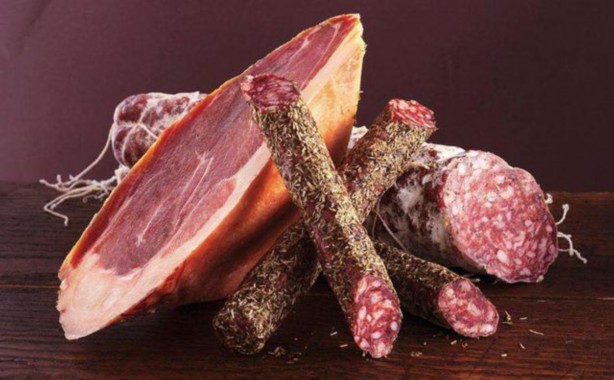
Take a look at this Australian Costco Spanish ham hanging from the rafters—each piece is a masterpiece of time!
A Table to Understand the Differences
To provide a clearer picture, here’s a simple comparison table:
| Feature | Spanish Ham | Australian Ham |
|---|
| Breed | Iberian black pigs / special white pigs | Commercially farmed common pigs |
| Raising | Free-range on acorns/grains or penned | Industrial feedlot raising |
| Process | Traditional natural air-drying, long aging | Industrial production, shorter aging |
| Flavor | Complex, nutty aroma, oily, melts in the mouth | Relatively simple, mainly salty |
| Price | Higher | More affordable |
So, is Australian ham worth buying? My view is: it depends on your purpose. If you just want to make a sandwich, cook a stir-fry, or pair with melon, Australian ham is a perfectly fine budget-friendly substitute—it is, after all, still meat. But if you’re aiming to savor the ultra-thin slices with fat melting on your tongue, nothing beats authentic Spanish Jamón Ibérico. Thinking both are equally delicious is mistaken!
Has anyone tried Australian ham? How is its taste? Feel free to join the discussion below! ¡Buen provecho!
